
Warm, Earthy Kitchen Trends We’re Loving Right Now
Bringing the beauty of Colorado’s natural landscape into the heart of your home.
There is something timeless about a kitchen that feels warm, grounded, and connected to nature. In Colorado, where mountain views, open landscapes, and natural materials are part of everyday life, it makes sense that homeowners are gravitating toward kitchens that feel less sterile and more inviting.
Today's kitchen design is moving beyond cool grays, stark white cabinetry, and overly polished finishes. Instead, we're embracing rich wood tones, organic textures, earthy colors, and materials that bring character and warmth into the home. The result is a kitchen that feels elevated yet comfortable—a space designed not only to look beautiful but also to support the way we live, cook, gather, and connect.
Whether you're planning a complete kitchen remodel or looking for ways to refresh your existing space, here are the warm, earthy kitchen trends we're loving right now and how to bring them into your Colorado home.
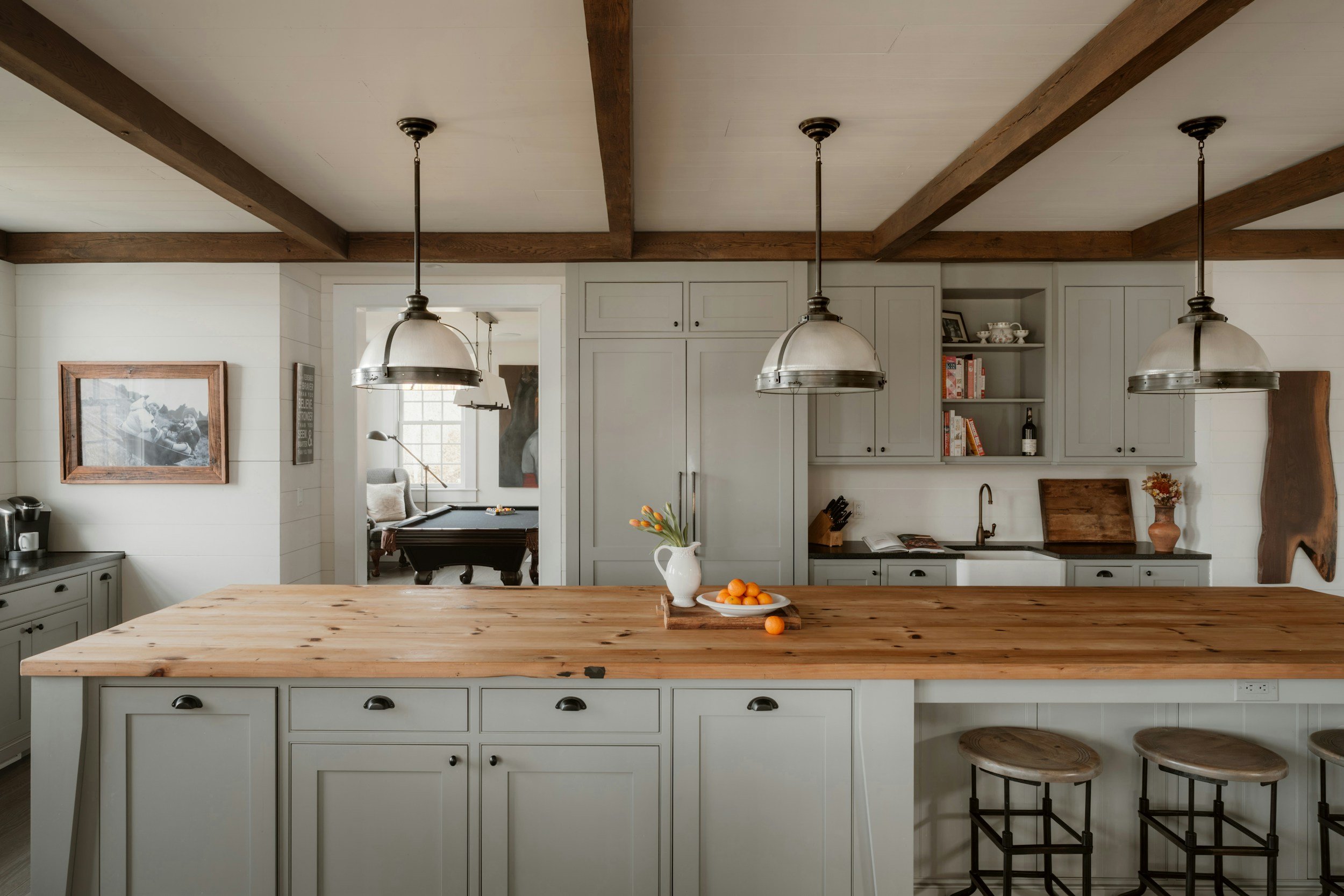
Photo by Clay Banks
Natural Wood Cabinetry That Brings the Outdoors In
Wood is having a well-deserved moment in kitchen design, and we're loving the return to natural finishes that highlight the beauty of the material itself. Rather than relying entirely on painted cabinetry, homeowners are incorporating oak, walnut, white oak, and other wood species to create depth, texture, and a more organic feel.
White oak remains a favorite for its versatility and subtle grain, while walnut offers deeper, richer tones that feel sophisticated and timeless. Natural wood cabinetry works beautifully in Colorado homes, complementing everything from mountain-modern architecture to contemporary homes along the Front Range.
How to incorporate this trend:
Choose natural or lightly stained wood cabinetry that allows the grain to show through.
Mix wood finishes with painted cabinets in warm white, olive, or muted taupe.
Use a wood island as a focal point against lighter perimeter cabinetry.
Consider wood shelving or a wood range hood to introduce warmth without committing to an entirely wood-filled kitchen.
Design tip: Balance is key. If you're using wood cabinetry throughout the kitchen, introduce contrasting countertops, textured backsplash materials, or lighter wall colors to keep the space feeling open and layered.

Kitchen Remodel in Highlands Ranch, Colorado. Installed by Striking Remodels
Earthy Colors Inspired by Colorado's Landscape
Color is one of the easiest ways to transform the mood of a kitchen. We're seeing a shift toward shades inspired by the natural world—colors that feel grounded, calming, and connected to the outdoors.
Think sage green, olive, clay, mushroom, warm taupe, muted terracotta, and creamy off-white. These colors feel especially at home in Colorado, where the landscape offers an endless palette of evergreen forests, sunbaked earth, weathered stone, and golden grasses.
Rather than choosing colors that make a bold statement for a season, these earthy tones create a backdrop that feels timeless and personal.
Our favorite ways to use earthy color:
Sage and olive green: Beautiful on kitchen islands, lower cabinets, or full cabinetry installations.
Warm taupe and mushroom: A sophisticated alternative to gray for cabinetry and walls.
Terracotta and clay: Ideal for handmade tile, decorative accents, and warm-toned finishes.
Creamy white: A soft, welcoming neutral that pairs naturally with wood, stone, and brass.
Deep brown and muted charcoal: Great for adding contrast and visual depth.
You don't need to commit to a colorful kitchen to embrace this trend. Even a muted green island, warm-toned backsplash, or earthy paint color can shift the entire atmosphere of a space.
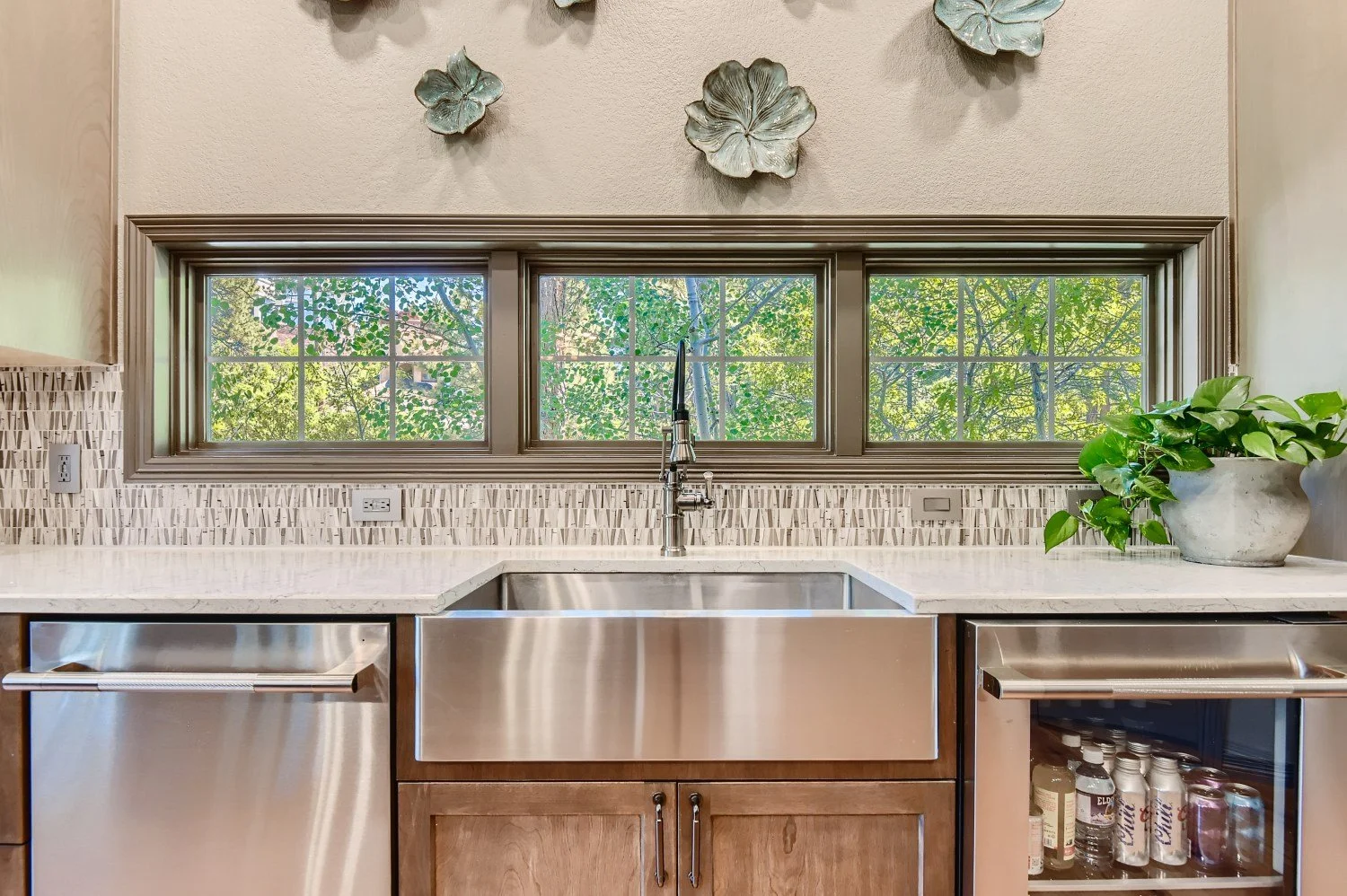
Kitchen Remodel in Castle Pines, Colorado. Installed by Striking Remodels
Natural Stone With Movement and Character
We're moving away from surfaces that look perfectly uniform and toward materials that have a little more personality. Natural stone brings variation, movement, and unique detailing that make a kitchen feel thoughtfully designed rather than mass-produced.
Quartzite, marble, granite, and other natural stones offer distinctive veining and color variations that can become a beautiful focal point. Warm whites, creamy beiges, soft browns, and stones with subtle gold or green undertones work particularly well with earthy kitchen palettes.
For homeowners who love the look of natural stone but want a different maintenance profile, high-quality engineered surfaces can also provide beautiful alternatives.
How to make stone a standout feature:
Extend countertop material up the wall for a seamless backsplash.
Choose a stone with subtle movement to complement natural wood cabinetry.
Use a statement island countertop to introduce texture and contrast.
Consider a waterfall edge when it suits the architecture and overall design.
Design tip: Let the material speak for itself. When selecting a stone with prominent veining or dramatic movement, keep surrounding finishes relatively simple so the countertop remains a focal point.
Remember that natural stone varies in porosity, durability, and maintenance requirements. Before selecting a material, consider how you use your kitchen and how much upkeep you're comfortable with.
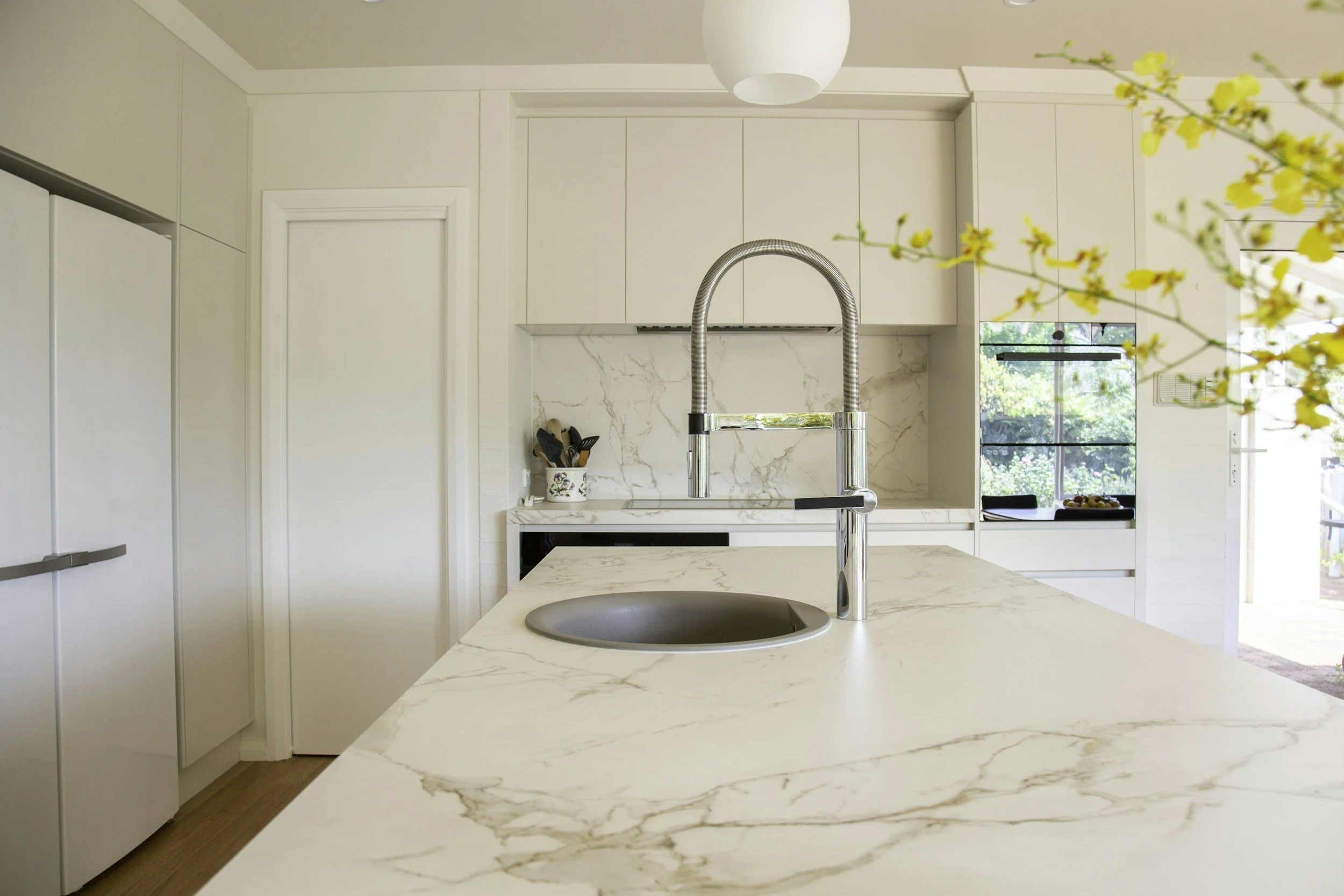
Photo by Simona Sergi
Layered Textures That Make a Kitchen Feel Collected
A warm, earthy kitchen is about more than color. Texture is what gives a space depth, dimension, and that inviting feeling you notice when you walk into a beautifully designed room.
We're loving kitchens that combine smooth and rough, polished and matte, refined and handmade. These subtle contrasts make even a simple color palette feel rich and interesting.
Some of our favorite combinations include:
Smooth wood cabinetry paired with handmade ceramic tile.
Honed stone countertops contrasted with polished metal hardware.
Natural wood beams alongside plaster-inspired walls.
Matte cabinetry paired with softly reflective lighting.
Textured tile balanced with clean, streamlined cabinet fronts.
In Colorado homes, where natural materials often play a central role in the architecture, these combinations can create a seamless connection between the kitchen and the surrounding environment.
The goal isn't to introduce as many textures as possible. It's to select a few complementary materials and allow each one to contribute something unique to the overall design.
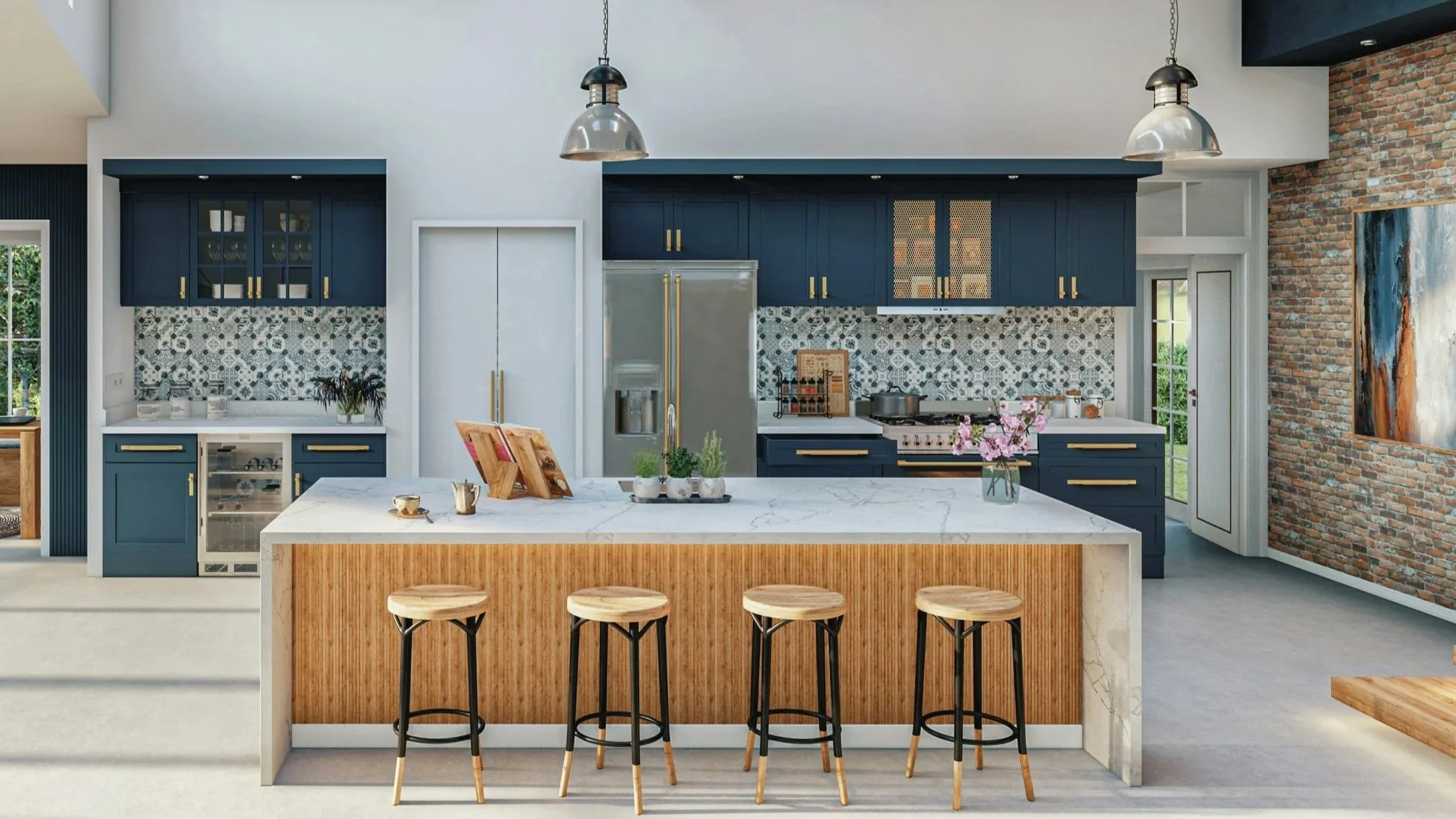
Photo by Murat Demircan
Handmade Tile and Organic Backsplashes
The backsplash is an opportunity to introduce personality without overwhelming the kitchen. We're especially drawn to handmade and handcrafted-looking tiles that feature subtle imperfections, tonal variation, and organic shapes.
Zellige-inspired tile, softly textured ceramic, elongated handmade-look subway tile, and natural stone backsplashes all bring a sense of craftsmanship to the space.
Instead of choosing a bright, high-contrast backsplash, consider warm white, sand, muted green, or creamy beige. These shades complement earthy cabinetry and allow the natural variation in the tile to shine.
For a more elevated look, carry the backsplash all the way to the ceiling behind the range or extend the countertop material up the wall.
Design tip: Pay attention to grout color. A closely matched grout creates a softer, more cohesive look, while contrasting grout emphasizes the tile pattern. Neither is inherently better—the right choice depends on whether you want the backsplash to blend in or become a feature.
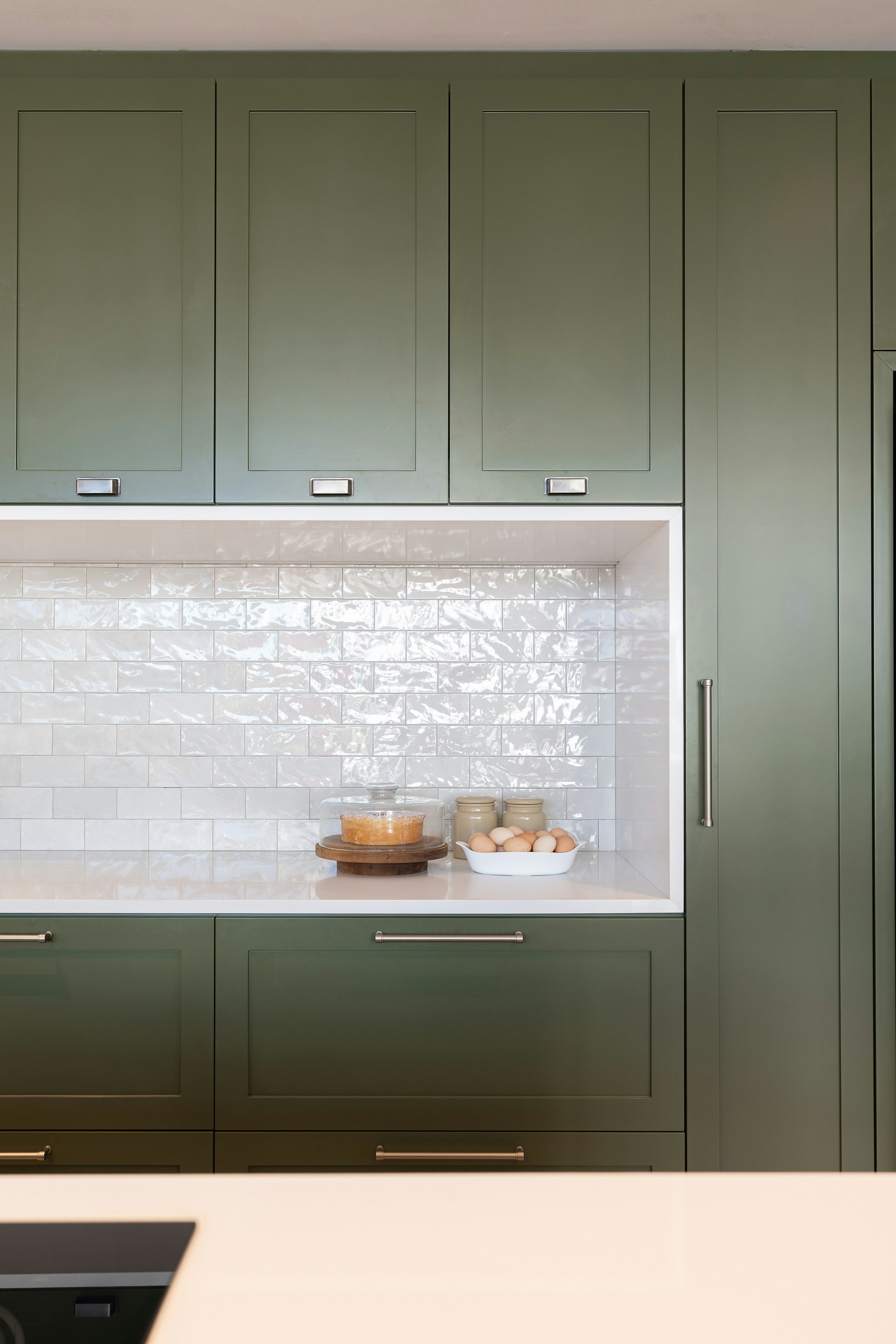
Photo by Caroline Badran
Warm Metals and Thoughtful Finishing Details
Hardware and plumbing fixtures may seem like small details, but they can have a significant impact on the overall feel of a kitchen.
Warm metals such as aged brass, brushed brass, bronze, and softer champagne finishes pair beautifully with natural wood, creamy cabinetry, and earthy colors. They introduce warmth without feeling overly decorative.
We're also seeing greater interest in mixing metals intentionally. For example, brushed brass cabinet hardware can work beautifully with a stainless steel range or darker bronze lighting.
The key is to create a sense of cohesion rather than matching every finish exactly.
Consider these finishing touches:
Warm brass or bronze cabinet pulls.
An understated faucet with a refined, timeless silhouette.
Decorative lighting that introduces contrast and sculptural interest.
Aged or brushed finishes that complement natural materials.
Simple, functional hardware that feels good to use every day.
Choose finishes based on the overall palette, and remember that metals can change in appearance depending on lighting and neighboring materials. Whenever possible, view samples together before making a final decision.
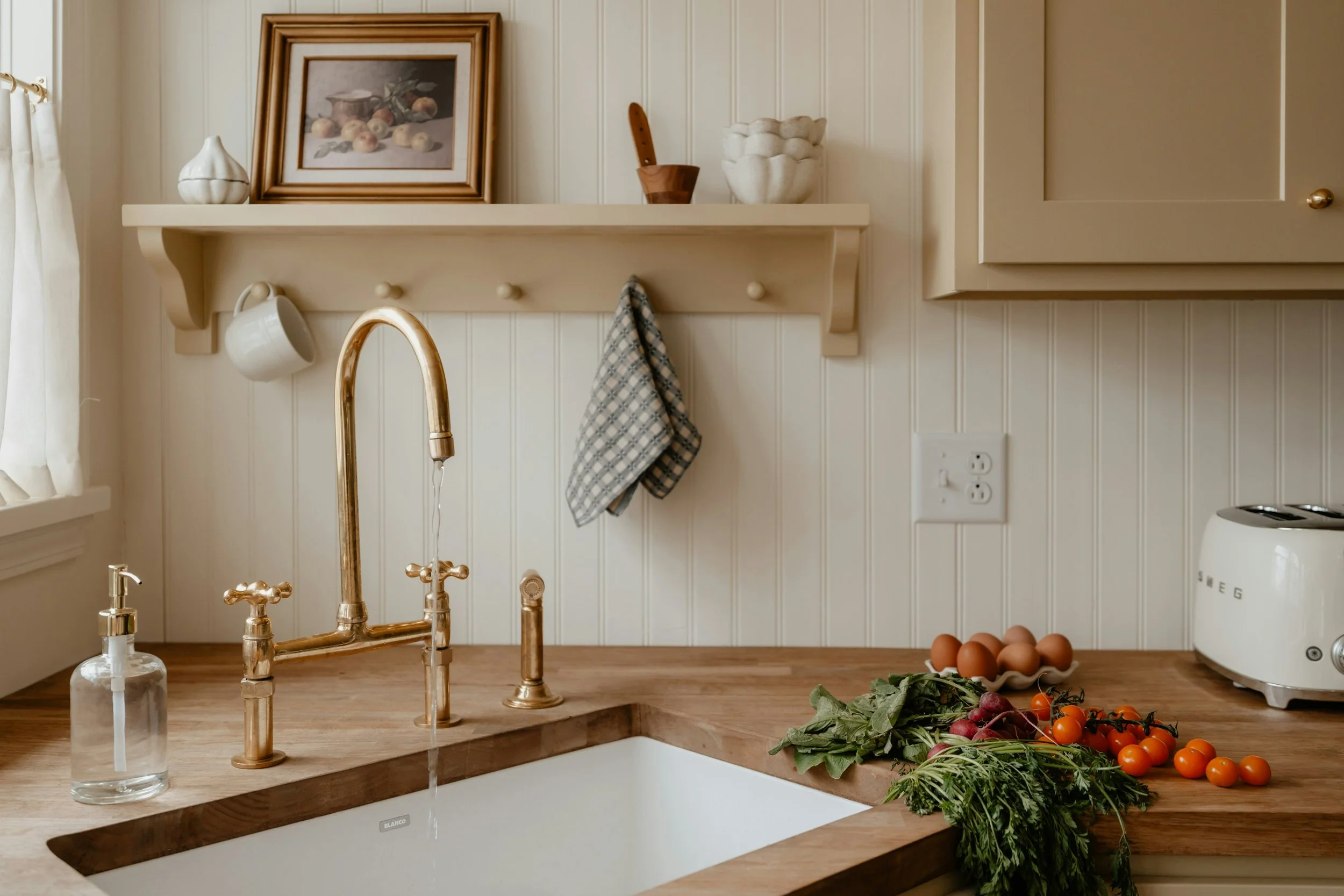
Photo by Clay Banks
Statement Range Hoods With Architectural Appeal
The range hood is becoming more than a functional necessity. It can serve as an architectural feature that anchors the kitchen and reinforces the overall design.
We're loving custom range hoods that incorporate natural materials, soft curves, plaster-inspired finishes, or wood detailing. These designs feel integrated into the architecture rather than appearing as an afterthought.
In Colorado homes, a thoughtfully designed hood can bring a subtle mountain-modern sensibility into the kitchen without relying on traditional rustic elements.
Some ideas worth considering:
A plaster-look hood against warm white or earthy cabinetry.
A wood-wrapped hood that coordinates with natural wood cabinets.
A simple, sculptural hood with softened edges.
A hood finished in the same color as the cabinetry for a seamless appearance.
The best range hood is one that complements the room's proportions and supports the cooking equipment beneath it. Ventilation performance, clearances, and applicable installation requirements should guide the design alongside aesthetics.
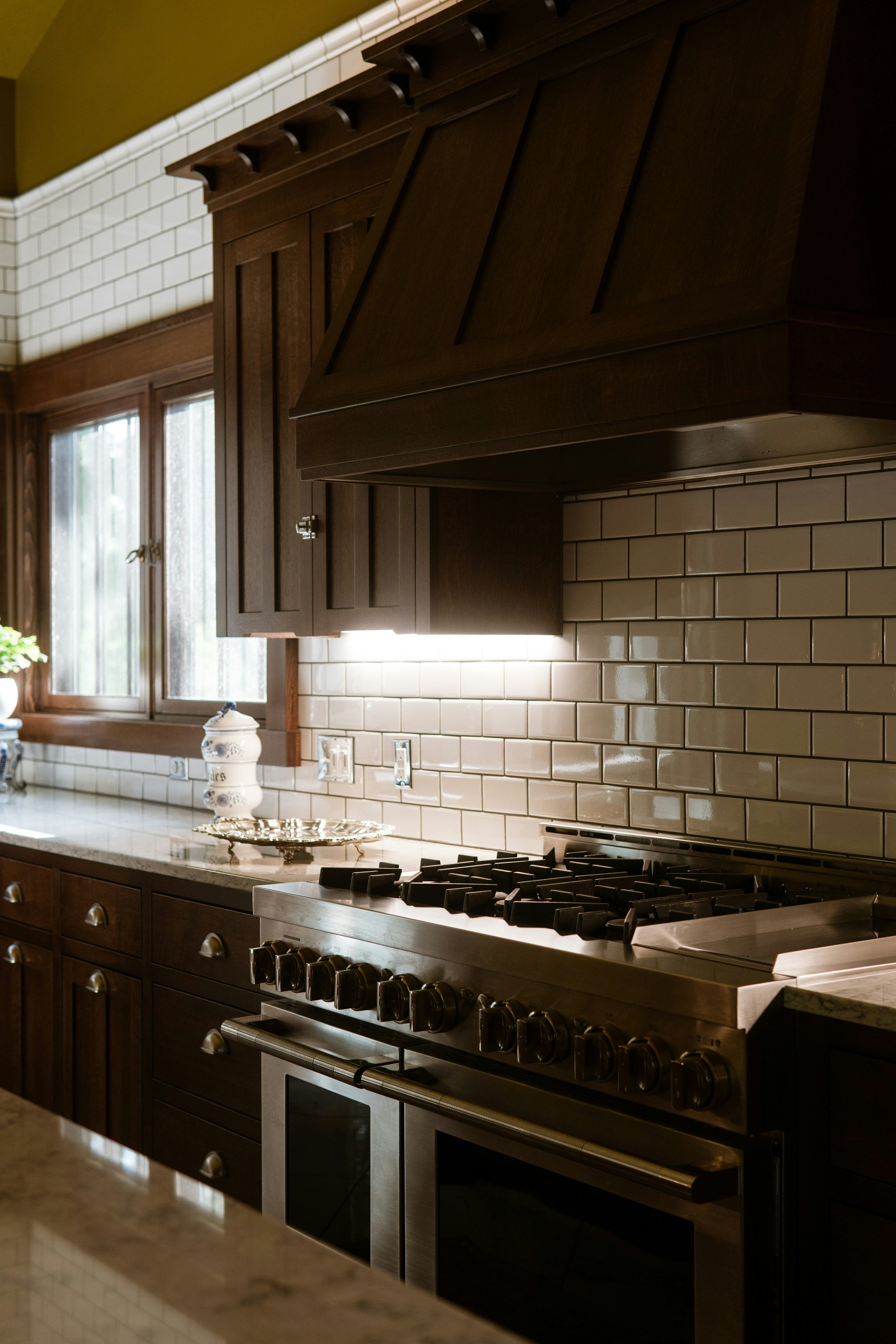
Photo by Taylor Friehl
Open Shelving and Displayed Everyday Essentials
Open shelving continues to appeal to homeowners who want their kitchens to feel personal, relaxed, and connected to the rest of the home.
When used thoughtfully, shelves can break up a long run of cabinetry, showcase beautiful materials, and provide a place for everyday essentials. Natural wood shelves are especially effective in warm, earthy kitchens because they add texture without introducing another dominant color.
Style shelves with a restrained mix of functional and decorative pieces: handmade ceramics, glassware, wooden bowls, cookbooks, and a few natural accents.
That said, open shelving isn't the right solution for every household. If you prefer a clean, uncluttered countertop or need substantial concealed storage, consider incorporating just one or two display shelves rather than replacing upper cabinets entirely.
Design tip: A combination of closed cabinetry and selective open shelving offers the best of both worlds—ample storage with a few opportunities to add personality.

Kitchen Remodel in Denver, Colorado. Installed by Striking Remodels & Designed by Adrienne Adams
Organic Shapes and Softer Kitchen Details
Straight lines and clean cabinetry will always have a place in kitchen design, but we're loving the way softer shapes can make a kitchen feel more welcoming.
Curved island ends, rounded pendant lights, arched niches, and gently sculptural stools introduce visual interest without sacrificing functionality.
These details work particularly well when paired with natural stone, wood cabinetry, and muted colors. The contrast between clean architectural lines and softer forms creates a space that feels considered rather than overly formal.
You don't need a complete redesign to incorporate this idea. A rounded pendant, curved counter stools, or a sculptural decorative object can introduce the same design language on a smaller scale.
For larger changes, consider how curved forms affect circulation, seating, countertop space, and the usable work area of the kitchen.

Kitchen Remodel in Englewood, Colorado. Installed by Striking Remodels
Kitchens Designed for Everyday Living
Perhaps the most important trend isn't a particular color or material. It's the shift toward kitchens that prioritize how people actually live.
A beautiful kitchen should work just as well on a busy weekday morning as it does when friends and family gather around the island. Warm, earthy design feels most successful when it is supported by thoughtful planning and practical storage.
We're seeing homeowners place greater emphasis on:
Functional storage: Deep drawers, pullout organizers, and well-planned pantry space.
Intentional lighting: A combination of ambient, task, and accent lighting.
Comfortable gathering areas: Islands that support cooking, casual meals, and conversation.
Durable materials: Finishes selected for the household's lifestyle and maintenance preferences.
Thoughtful layouts: Clear circulation paths and efficient placement of the sink, range, and refrigerator.
Colorado homes vary widely in size, architecture, and how their owners use the space. A successful kitchen design should respond to the specific home rather than simply reproduce a popular trend.
The goal is a kitchen that feels beautiful because it works beautifully.
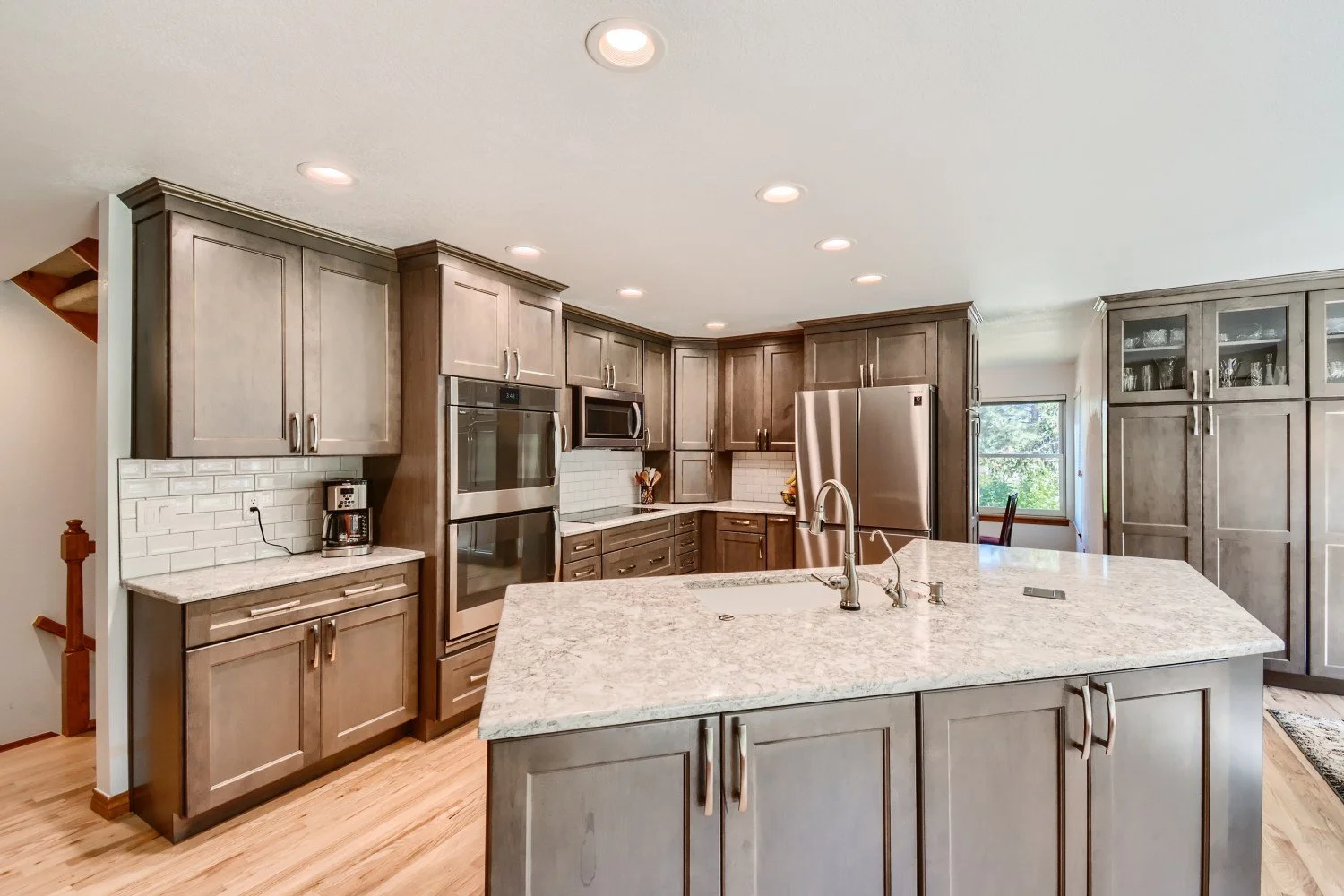
Kitchen Remodel in Ken Caryl, Colorado. Installed by Striking Remodels
Bringing Warm, Earthy Kitchen Design Into Your Colorado Home
One of the things we love most about warm, earthy kitchens is their versatility. They can feel modern and minimal, relaxed and rustic, or refined and sophisticated. The common thread is a connection to natural materials, thoughtful details, and a palette that feels comfortable to live with over time.
When planning your kitchen remodel, start by identifying the feeling you want the space to create. Do you want a light and airy kitchen with pale wood and creamy stone? A richer palette with walnut, olive green, and bronze? Or a balance of modern cabinetry and handcrafted finishes?
From there, focus on a cohesive material palette rather than selecting every finish individually. Consider how cabinetry, countertops, backsplash, flooring, lighting, and hardware will work together—and how those choices connect to the rest of your home.
In Colorado, where the surrounding landscape offers so much inspiration, a kitchen doesn't need to imitate a mountain cabin or embrace a particular regional style to feel at home. Sometimes, the most beautiful approach is simply to bring in natural textures, warm colors, and materials that feel authentic to the people who live there.
The takeaway: The warm, earthy kitchen trend is about creating a space that feels grounded, timeless, and deeply livable. By combining natural wood, organic color, expressive stone, layered textures, and thoughtful functionality, you can create a kitchen that feels just as good to live in as it looks.
Ready to transform your kitchen? Thoughtful design begins with understanding your home, your lifestyle, and the details that matter most to you. With the right balance of materials, color, and function, your kitchen can become a welcoming centerpiece that feels distinctly yours.