
Smart Storage Ideas for your Laundry Room & Closet
A well-organized home isn't just about having less clutter. It's about creating spaces that make everyday life easier.
From the laundry room that seems to collect everything to the closet that never has enough room, these hardworking spaces often become some of the most overlooked areas in a home. With the right combination of storage solutions, thoughtful layouts, and intentional design, however, they can become some of the most functional—and satisfying—spaces in your house.
For Colorado homeowners, organization comes with a few unique considerations. Seasonal clothing, bulky winter coats, hiking boots, ski gear, and outdoor equipment all require a place to land. Add busy family schedules and active lifestyles, and smart storage becomes essential.
Whether you're planning a full remodel or looking for simple ways to improve your existing spaces, here are some of our favorite laundry room and closet organization ideas to help you make the most of every square foot.

Artizen Cabinetry: Slimline Door Style
Start With How You Actually Live
Before purchasing bins, baskets, or closet organizers, take a step back and evaluate how you use the space.
The most effective organization systems are designed around your daily routines—not the other way around.
In your laundry room, consider where dirty clothes accumulate, where you fold clean laundry, and where you store detergents, cleaning supplies, and household essentials. In your closet, think about which items you reach for every day, which belongings are seasonal, and where you tend to lose track of things.
Ask yourself:
What items do I use most frequently?
What creates the most clutter or frustration?
What needs to be easily accessible?
What can be stored higher, lower, or out of sight?
Are there tasks I could make easier with a different layout?
For example, if clean laundry frequently ends up on the bed because there isn't enough folding space, adding a countertop above front-loading machines may solve a bigger problem than adding another cabinet.
If your closet feels crowded, the solution might not be more storage. It may be a better balance of hanging space, drawers, shelving, and designated areas for accessories.
Design tip: Identify your biggest daily frustrations before investing in organizational products. Solving the underlying problem will make your space more functional long-term.
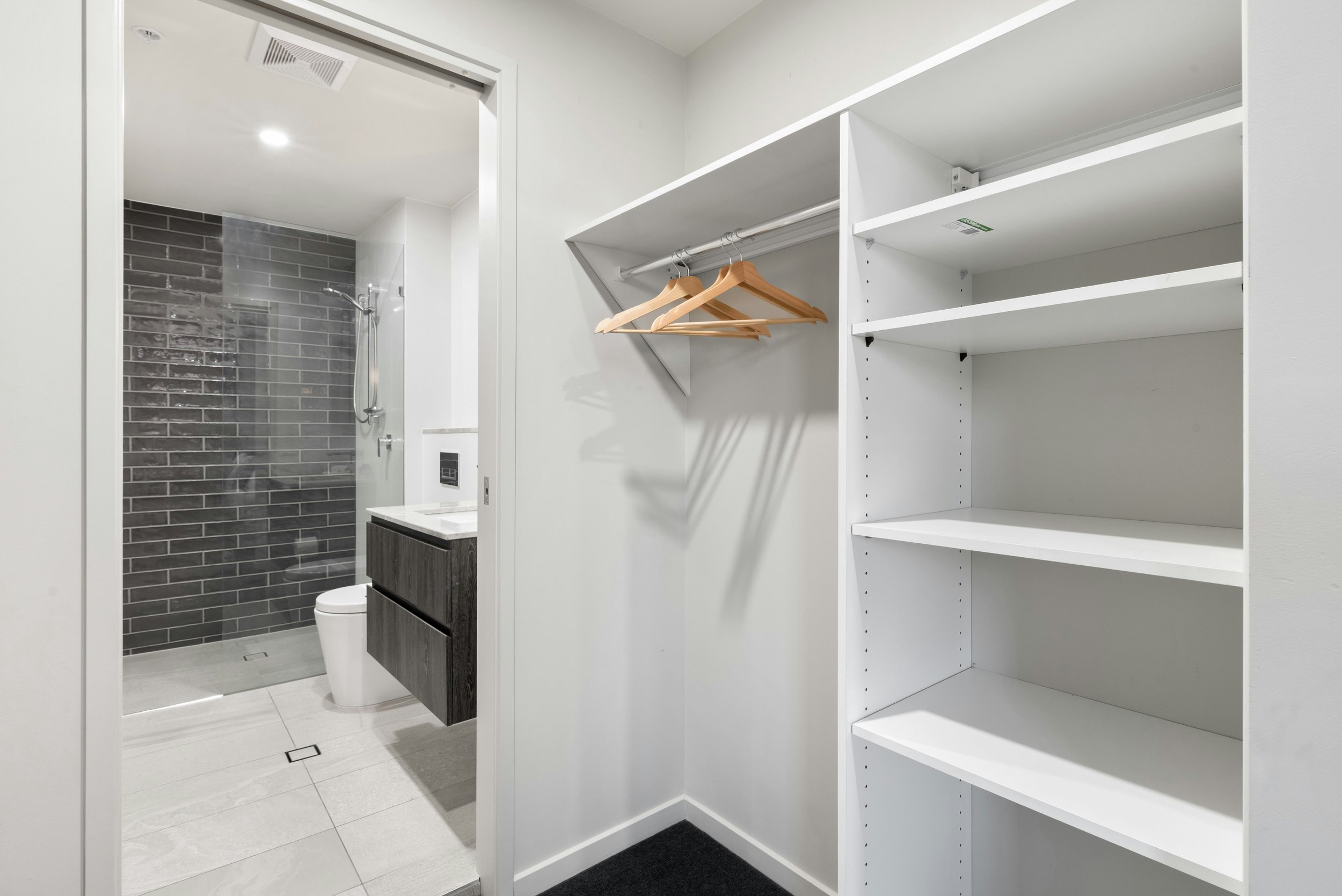
Photo by Steven Un
Make Your Laundry Room Work Harder
Laundry rooms often need to accommodate far more than washing and drying clothes. They may also serve as mudrooms, pet-washing areas, cleaning supply storage, linen storage, or even overflow pantries.
The key is to create distinct zones that give everything a purpose.
Add a folding surface
A countertop above front-loading machines creates an immediate improvement in functionality. It provides a place to fold clothing, sort laundry, and temporarily set down clean items.
If your layout doesn't allow for a continuous countertop, consider a small wall-mounted folding surface or a nearby worktable.
Incorporate pull-out hampers
Built-in or pull-out hampers help keep dirty laundry contained while making sorting easier. If your household separates clothing by color, fabric, or family member, consider assigning each hamper a specific purpose.
For families, this can also encourage everyone to participate in the laundry routine.
Maximize vertical storage
Tall cabinets and shelving take advantage of wall space without consuming additional floor area. Store everyday supplies within easy reach and reserve upper shelves for less frequently used items.
If you have a narrow laundry room, vertical storage can be especially valuable.
Include a hanging rod
A hanging rod is ideal for air-drying delicate garments, hanging freshly ironed clothing, or keeping shirts wrinkle-free after drying.
Even a short rod between cabinets or above a countertop can make a meaningful difference.
Don't forget the utility sink
When space and plumbing allow, a utility sink provides a convenient place to hand-wash garments, rinse muddy outdoor clothing, clean paintbrushes, or tackle other messy household tasks.
For Colorado households that enjoy hiking, gardening, skiing, and outdoor activities, this feature can be particularly useful.
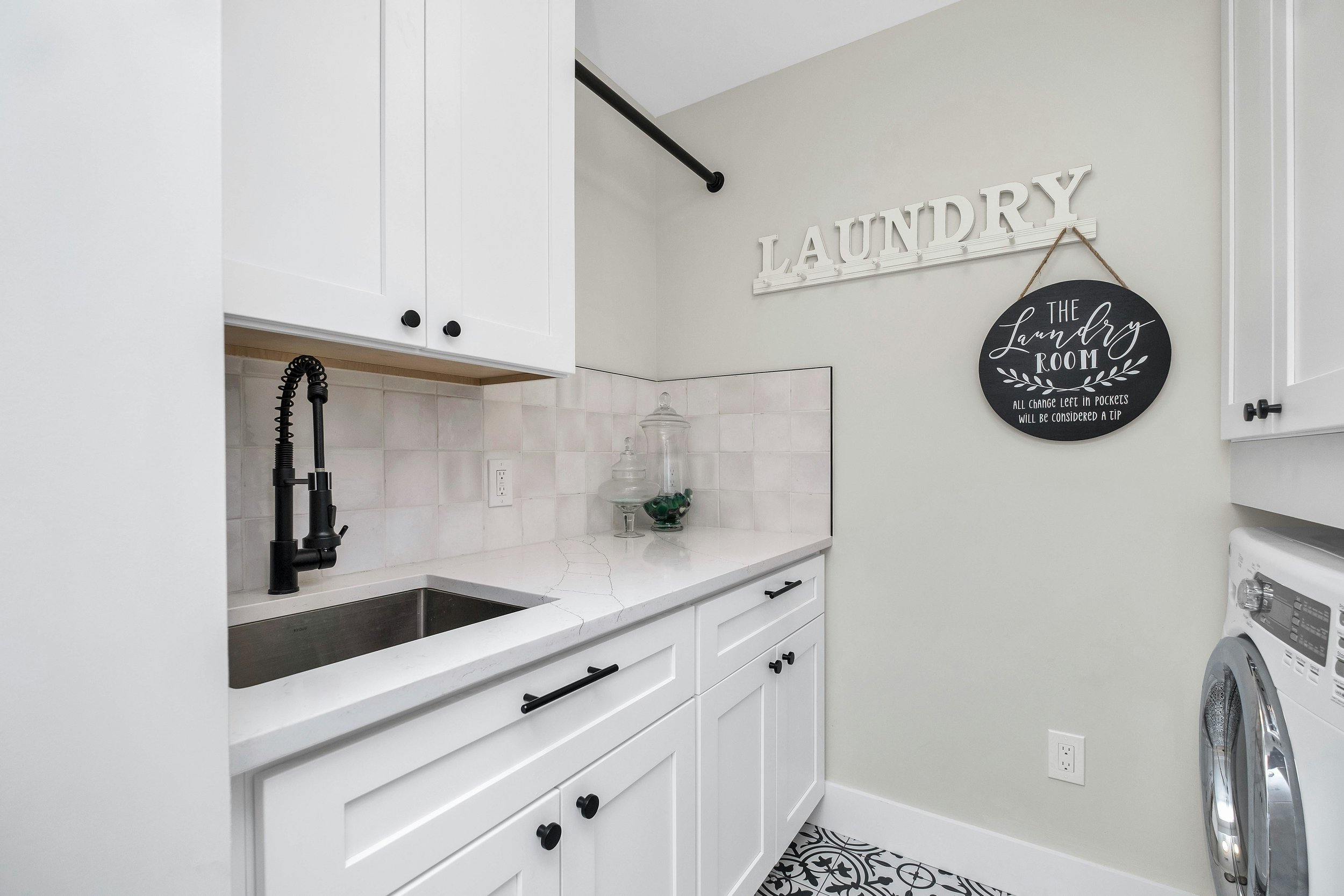
Photo by Zac Gudakov
Design a Closet Around Your Wardrobe
Closet organization isn't simply about fitting more items into a small space. It's about making your wardrobe easier to see, access, and maintain.
A thoughtfully designed closet balances different types of storage according to what you own.
Use a combination of hanging heights
Not all clothing requires the same amount of space.
Double-hanging sections: Ideal for shirts, blouses, folded-over trousers, and shorter garments.
Long-hanging sections: Best for dresses, coats, jumpsuits, and longer items.
Adjustable shelves: Useful for sweaters, handbags, hats, and accessories.
Customizing these sections to your actual wardrobe can dramatically improve the amount of usable storage.
Add drawers for smaller items
Drawers help contain socks, undergarments, workout accessories, and other small items that can quickly become disorganized on open shelves.
Dividers keep everything in its place and make it easier to maintain the system over time.
Give shoes a dedicated home
Shoes are often one of the biggest sources of closet clutter. Depending on your collection, consider adjustable shelves, angled shoe racks, pull-out trays, or open cubbies.
Keep frequently worn shoes at a convenient height and reserve higher or lower shelves for occasional-use footwear.
Make use of doors and overlooked spaces
The backs of closet doors can accommodate accessories, belts, scarves, or smaller items when clearance allows. Narrow vertical spaces can also be used for pull-out storage or additional shelving.
Even a small reach-in closet can become significantly more functional when its interior is designed intentionally.
Design tip: Measure your actual clothing, shoes, and accessories before finalizing a closet layout. A storage system should fit your belongings rather than forcing you to reorganize your wardrobe around it.
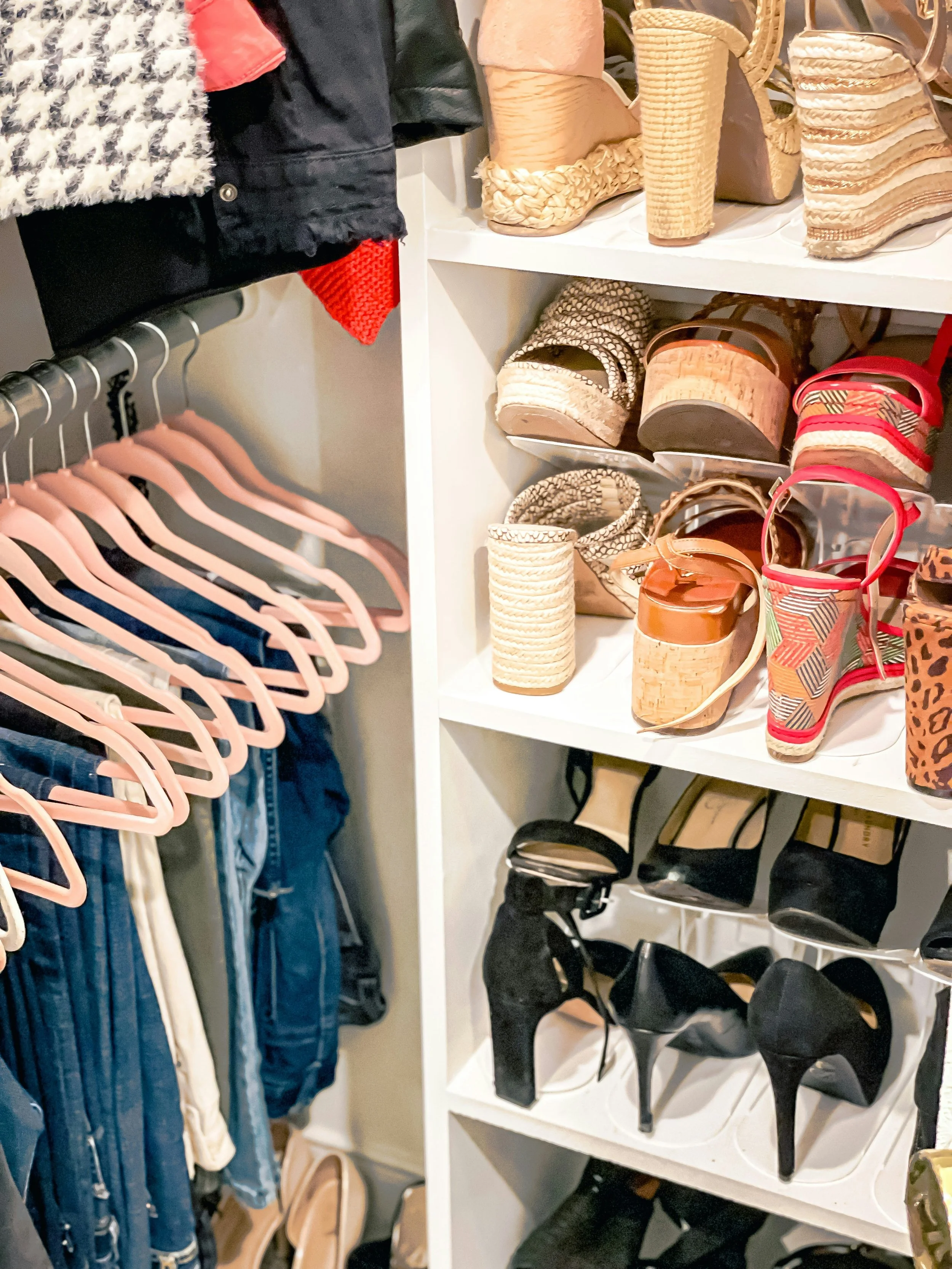
Photo by Cabri Caldwell
Create a Plan for Colorado's Seasonal Gear
Colorado living often means rotating between very different wardrobes throughout the year. Winter coats, insulated layers, snow pants, hiking equipment, and summer outdoor gear can quickly overwhelm closets and entryways if they don't have a designated home.
The solution is to organize around the seasons you experience.
Rotate seasonal clothing
Organize your storage according to frequency of use. Everyday items should be easy to reach, while seasonal and occasional-use belongings can occupy less accessible spaces.
Before storing items, make sure they are clean and completely dry. Use breathable storage for garments that benefit from airflow, and avoid compressing delicate items for extended periods.
Establish a landing zone for outdoor gear
If your home has a mudroom, entryway, or laundry room near an exterior door, consider adding:
Hooks for coats, backpacks, and everyday bags
A boot tray for wet or muddy footwear
Baskets for gloves, hats, and scarves
Shelving for outdoor accessories
A dedicated place for pet leashes and walking supplies
A well-designed landing zone keeps outdoor mess from spreading through the house.
Store bulky items strategically
Winter boots, ski helmets, and outdoor equipment can take up considerable room. Identify which items need frequent access and which can be stored in a garage, basement, or dedicated storage area, provided the conditions are suitable for the items.
For Colorado homes, it's also worth considering how snowmelt and moisture affect storage. Use washable boot trays, moisture-resistant surfaces where appropriate, and adequate ventilation to help wet gear dry properly.
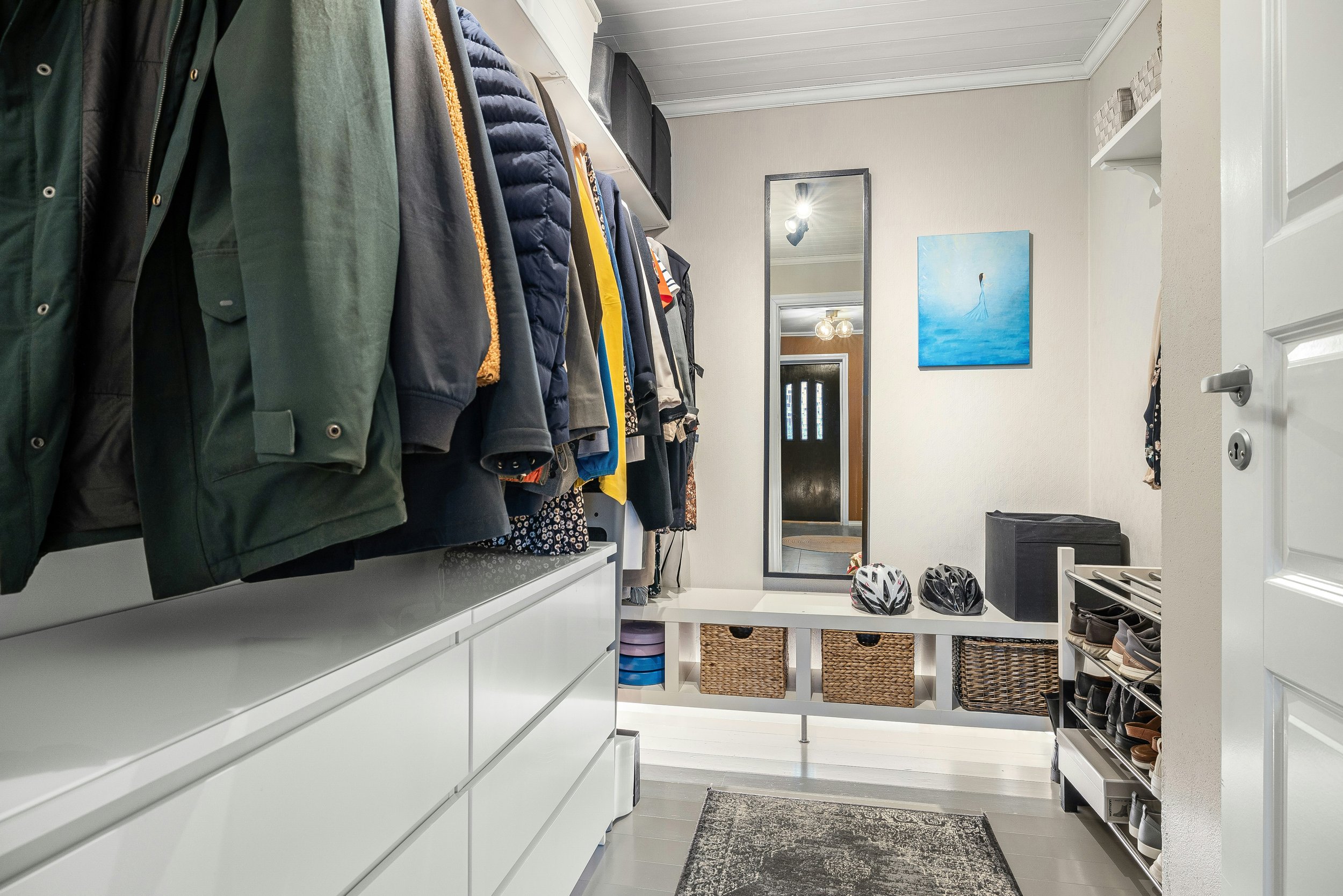
Photo by Alex Tyson
Use Smart Storage to Maximize Every Inch
Whether you're working with a spacious laundry room or a compact reach-in closet, the most effective organization systems use available space efficiently.
Here are several storage solutions worth considering.
Built-in cabinetry
Cabinetry provides concealed storage for cleaning products, linens, laundry supplies, and household essentials. A combination of closed cabinets and open shelving offers flexibility without making the room feel visually crowded.
Pull-out accessories
Pull-out hampers, narrow storage drawers, and sliding shelves make it easier to access items tucked into deeper cabinets. These solutions are especially helpful in small spaces where every inch counts.
Adjustable shelving
Adjustable shelves allow your storage system to evolve as your needs change. This is particularly useful for closets that must accommodate different clothing styles or changing family needs.
Overhead storage
Upper cabinets and high shelves can accommodate luggage, seasonal decorations, extra bedding, and other items that aren't needed every day. Keep heavier items at a safe, accessible height whenever possible.
Coordinated containers and baskets
Matching bins can make open shelving look calmer and more cohesive. Labeling containers helps family members find and return items without having to search through every shelf.
Design tip: Organization doesn't have to mean hiding everything. A combination of concealed storage for visual simplicity and attractive open storage for frequently used items often creates the best balance.
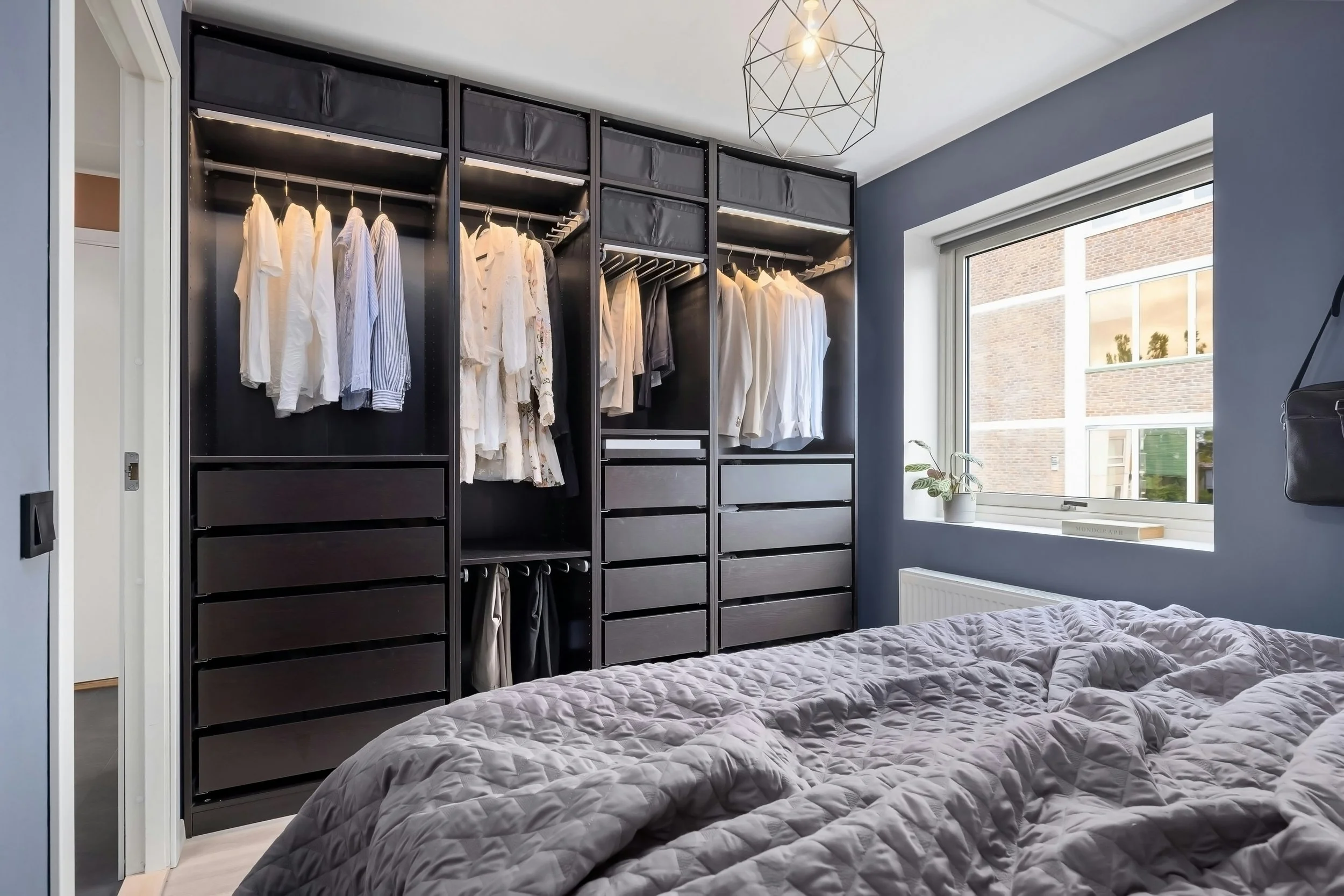
Photo by Lisa Anna
Make Organization Feel Like Part of Your Interior Design
Functional spaces deserve thoughtful design, too.
Your laundry room and closet don't need to be purely utilitarian. Material selections, lighting, hardware, and color can make these rooms feel like intentional extensions of the rest of your home.
For a warm, Colorado-inspired aesthetic, consider natural wood tones, creamy whites, soft taupes, muted greens, and textured finishes that create a relaxed, timeless atmosphere.
Some design details to consider include:
Cabinetry: Shaker-style doors for a classic look or simple slab fronts for a more contemporary aesthetic.
Countertops: Durable surfaces that are easy to clean and suitable for the intended use.
Flooring: Materials selected for durability, moisture exposure, and ease of maintenance.
Lighting: Bright, even task lighting in laundry rooms and well-distributed lighting in closets.
Hardware: Simple pulls and knobs that complement the home's broader design style.
Wall finishes: Washable paint or other finishes appropriate for the room's conditions.
Closet lighting deserves special attention. Good illumination helps you distinguish colors, locate accessories, and use the entire closet more effectively. Consider overhead lighting paired with additional lighting where needed, ensuring that fixtures are appropriate for the installation location.
For laundry rooms, prioritize sufficient task lighting over folding areas, sinks, and appliances.
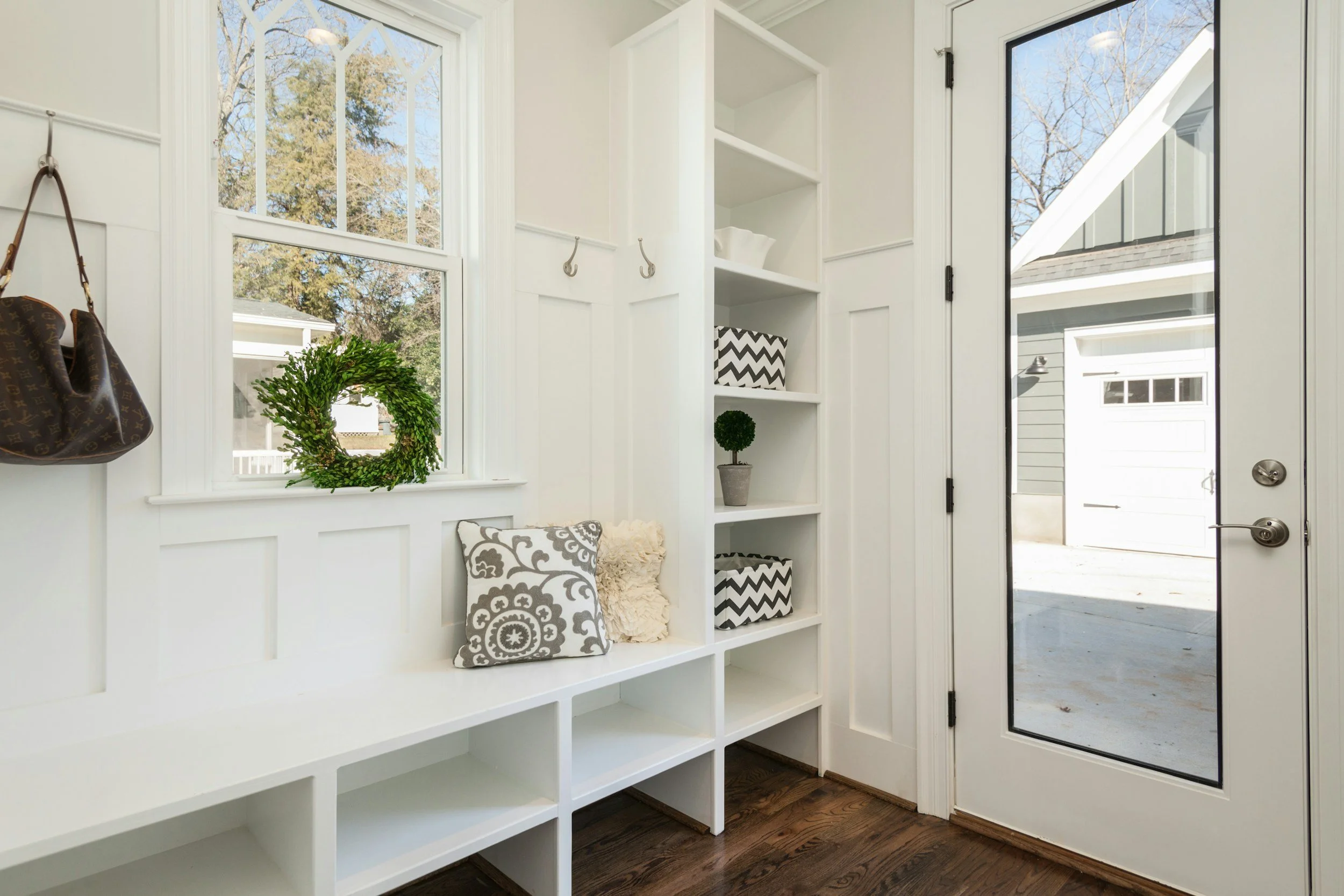
Photo by Douglas Sheppard
Organize for Long-Term Success, Not Just a Picture-Perfect Result
One of the biggest mistakes homeowners make is creating an organizational system that looks beautiful on day one but is difficult to maintain.
The best system is the one that works with your habits and feels easy enough to use every day.
Start by removing items you no longer need, use, or want. Then group similar belongings together and assign each category a designated home.
Keep frequently used items accessible, avoid overfilling shelves and drawers, and leave some room for new purchases or changing needs.
For families, simple systems are often the most successful. Clearly labeled baskets, accessible hooks, and easy-to-reach storage encourage everyone to participate in keeping shared spaces organized.
You might also establish a brief seasonal reset to rotate clothing, reassess storage needs, and return misplaced items to their designated homes.
Remember, an organized home doesn't need to remain perfectly styled at all times. It should make everyday life easier, reduce visual clutter, and help you spend less time searching for things.
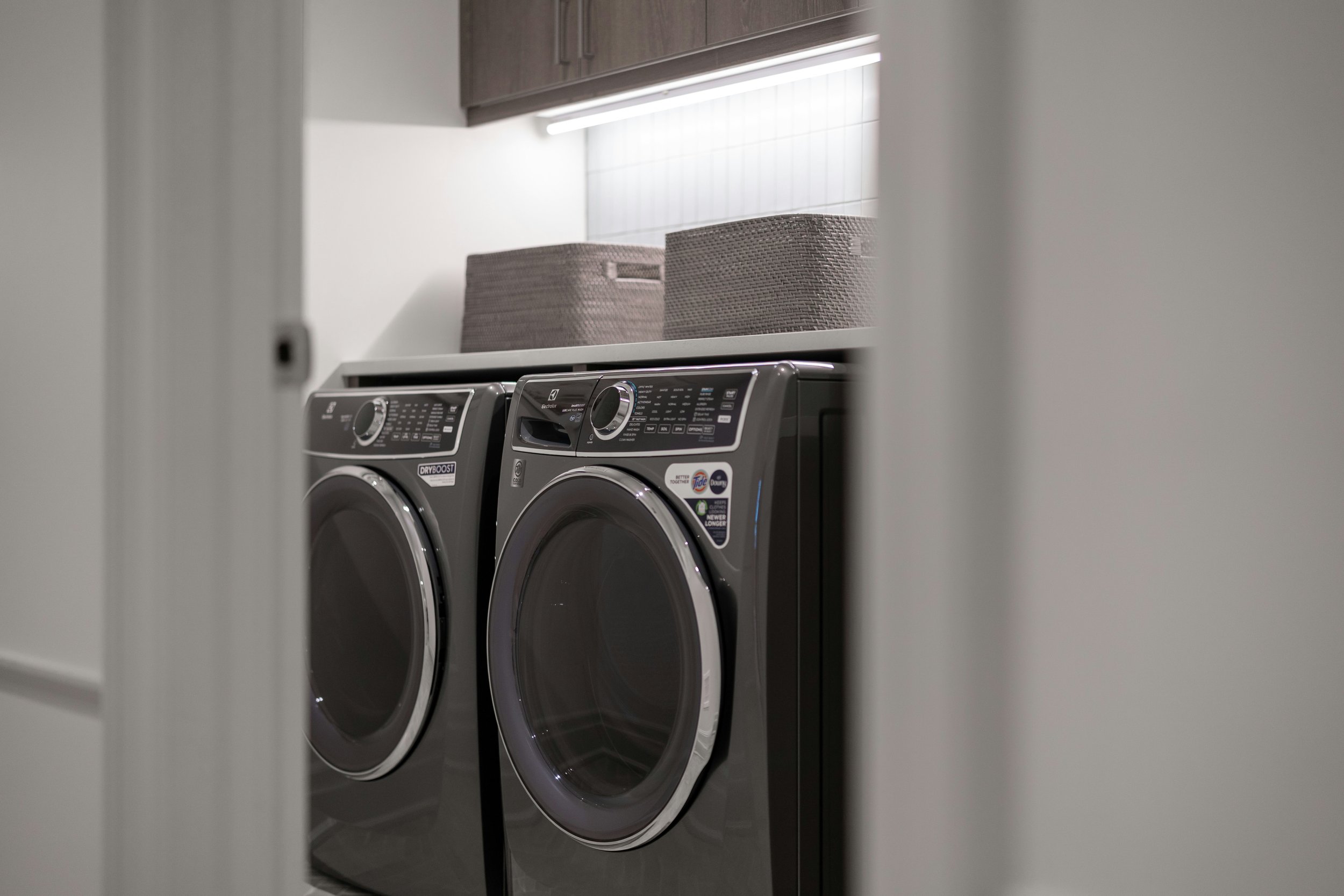
Photo by Franco Debarto
When Should You Consider a Laundry Room or Closet Remodel?
Sometimes, adding bins and reorganizing shelves isn't enough. If your space consistently feels cramped, inefficient, or difficult to maintain, a remodel may offer a more lasting solution.
Consider professional design help if:
Your laundry room lacks adequate folding or storage space.
Appliances, doors, or cabinets interfere with one another.
Your closet has substantial unused vertical space.
You need better storage for a growing family or changing lifestyle.
You want to incorporate custom cabinetry, built-ins, or integrated lighting.
You're already remodeling another area and want to improve nearby storage at the same time.
A designer can help evaluate the layout, identify opportunities you may have overlooked, and develop a coordinated storage plan that balances function, aesthetics, and budget.
If you're planning a larger renovation, it's often more efficient to address these spaces as part of the overall design rather than treating them as an afterthought.
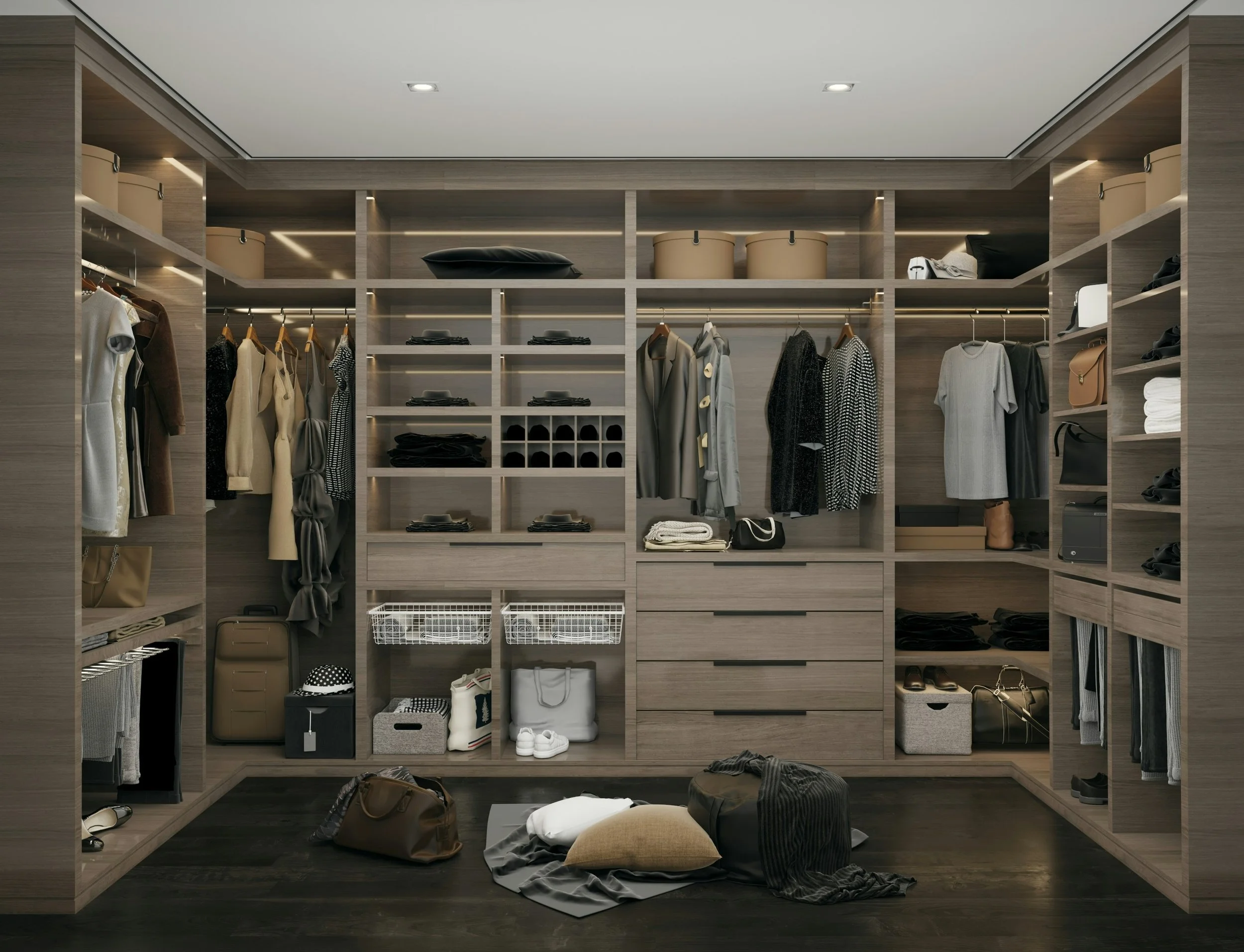
Photo by Ali Moradi
Final Thoughts: A More Organized Home Starts With Thoughtful Design
Your laundry room and closets may not be the first spaces guests notice, but they can have an enormous impact on how your home feels and functions every day.
When storage is designed around your lifestyle, routines become easier. Clutter has a place to go. Seasonal transitions become less stressful. And the spaces you use every day begin to feel calmer, more intentional, and more enjoyable.
Whether you're making a few simple organizational changes or planning a complete laundry room or closet renovation, start by identifying what isn't working and what would make your daily routines easier.
Then build a design around those needs.
Ready to make better use of your space?
Thoughtful interior design can help you transform overlooked areas into beautiful, highly functional spaces that support the way you live. From custom closet layouts to hardworking laundry rooms, the right storage solutions can make a meaningful difference throughout your Colorado home.