
How to Mix Metals in Kitchen & Bath Design
When it comes to kitchen and bathroom design, the smallest details often make the biggest difference. Cabinet hardware, faucets, shower fixtures, lighting, and decorative accessories all contribute to the overall character of a space. One design choice that can have a surprisingly significant impact is the use of mixed metals.
Gone are the days when every finish in a room needed to match perfectly. Today, some of the most beautiful kitchens and bathrooms combine warm brass, polished nickel, matte black, brushed bronze, and even unexpected metallic finishes to create spaces that feel layered, sophisticated, and personal.
For Colorado homeowners planning a remodel, mixing metals is an opportunity to add warmth to natural materials, complement earthy color palettes, and introduce distinctive details without overwhelming the design. The key is knowing how to balance finishes so the space feels intentional rather than mismatched.
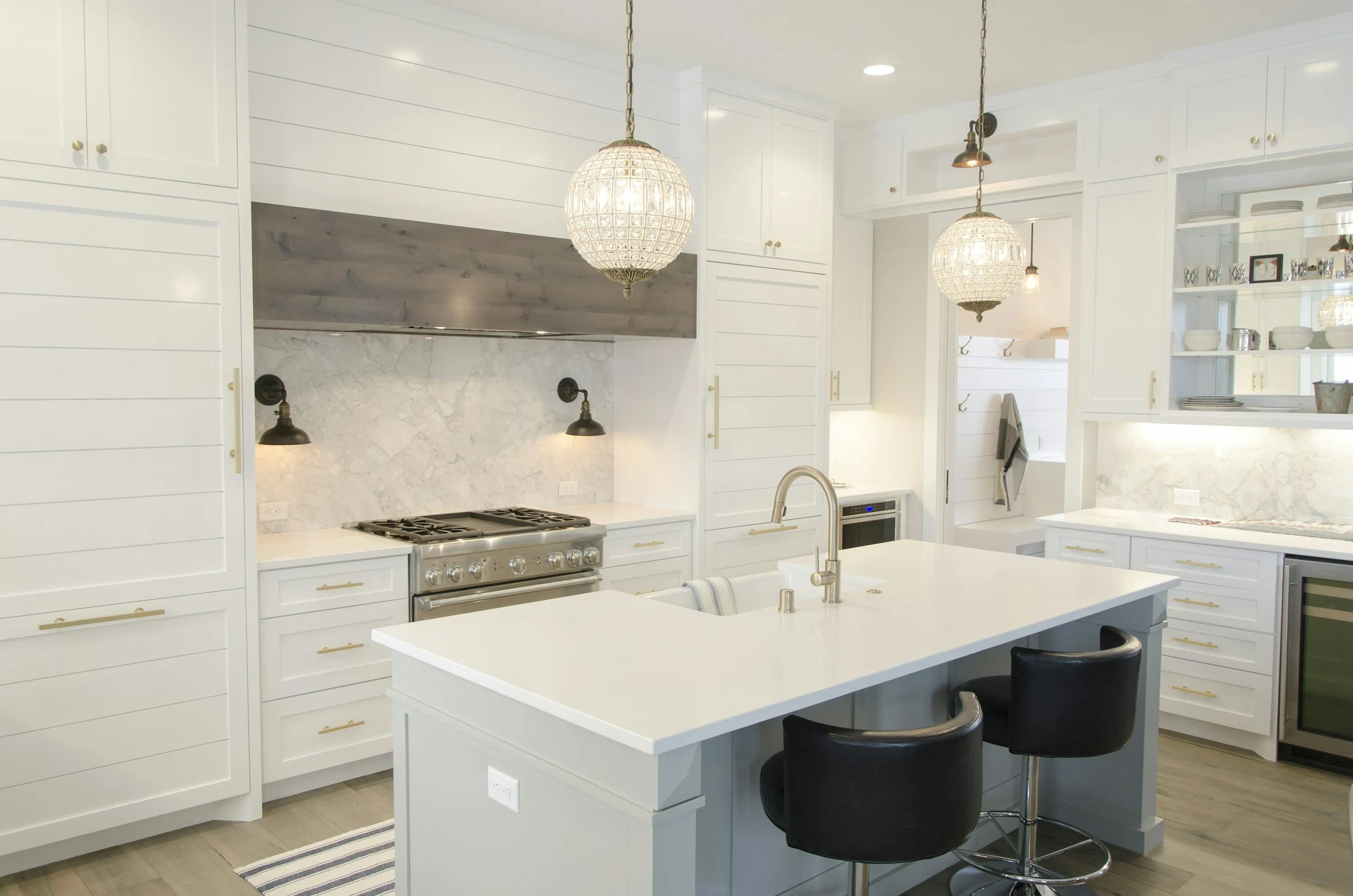
Photo by Aaron Huber
Why Mixing Metals Works
Mixing metals adds depth and dimension to a kitchen or bathroom. Instead of relying on one finish throughout the entire room, different metals create subtle contrast and help individual design elements stand out.
Consider a kitchen with white oak cabinetry, natural stone countertops, and a warm white backsplash. Brushed brass cabinet pulls introduce warmth, while a polished nickel faucet adds a cooler, reflective element. Matte black lighting can provide contrast and definition, tying the entire composition together.
In a bathroom, a brushed bronze shower system paired with warm stone tile and a polished nickel vanity faucet can feel both contemporary and timeless. Each finish serves a purpose, contributing to the overall palette rather than competing for attention.
Mixed metals also offer more flexibility when selecting fixtures. Instead of limiting yourself to a single manufacturer's finish or one matching collection, you can choose products based on their form, function, and design character.
The result is a space that feels curated rather than purchased as a matching set.
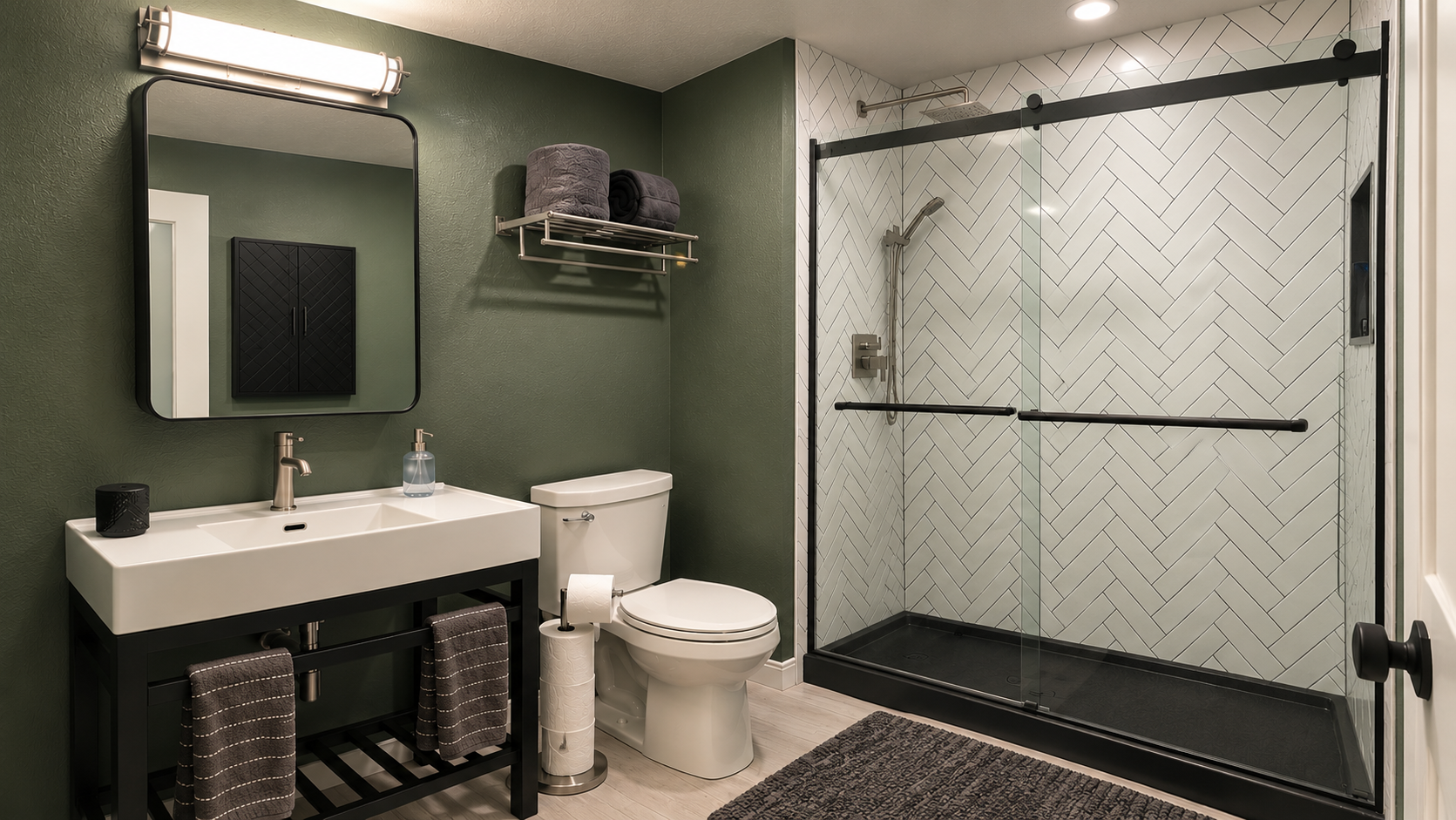
Bathroom Remodel in Denver, Colorado.
Start With a Dominant Metal
One of the easiest ways to create a cohesive mixed-metal design is to select one primary finish and use additional metals as accents.
A helpful starting point is the 60-30-10 approach:
60% Dominant Finish: The primary metal that establishes the overall look.
30% Secondary Finish: A complementary metal that introduces variation.
10% Accent Finish: A distinctive finish used sparingly for contrast or visual interest.
These percentages are a design guideline, not a strict rule. The goal is to create a clear visual hierarchy so the finishes feel balanced.
For example, a kitchen might feature brushed nickel plumbing fixtures, brass cabinet hardware, and black pendant lights. In a bathroom, brushed bronze could establish the main palette, while polished nickel and black provide contrast.
Your dominant metal does not necessarily need to be the warmest or most noticeable finish. It should simply be the finish that creates the strongest sense of continuity throughout the space.
Consider the finish you want to notice first. If the faucet is a sculptural focal point, let it lead the design. If the cabinetry and lighting are the stars, choose a quieter plumbing finish that supports them.
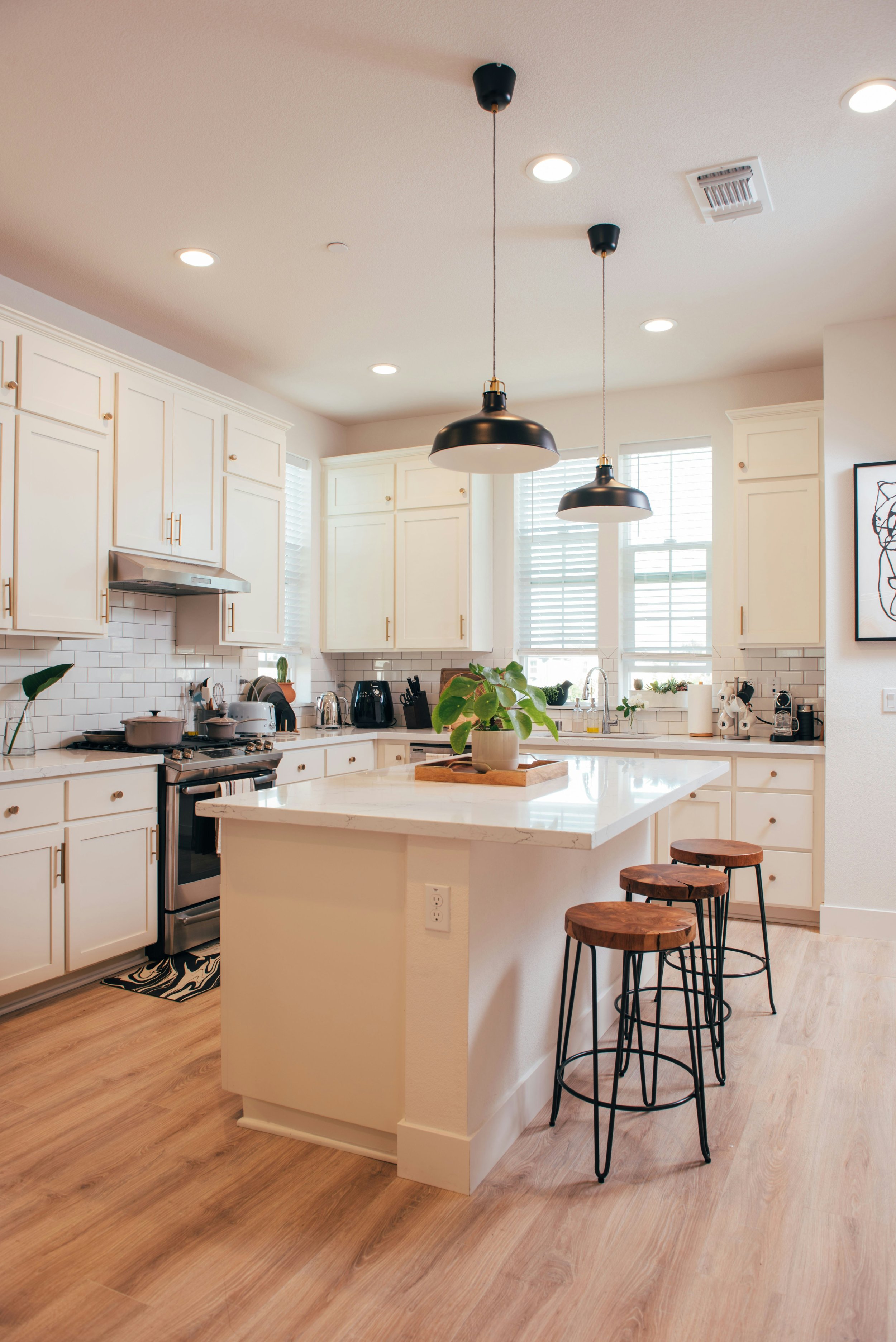
Photo by Kailun Zhang
Understand Warm and Cool Metal Finishes
Metal finishes generally fall into warm, cool, or neutral categories. Understanding these undertones makes it easier to combine finishes successfully.
Brushed Brass: Warm, soft, understated. Works well with oak, walnut, cream, natural stone.
Polished Nickel: Cool, reflective, classic. Works well with marble, white cabinetry, transitional spaces.
Brushed Nickel: Soft, versatile, understated. Works well with almost any palette.
Brushed Bronze: Rich, earthy, sophisticated. Works well with warm woods, deep greens, textured stone.
Matte Black: Bold, graphic, contemporary. Works well with white oak, concrete, light stone.
Polished Chrome: Bright, crisp, reflective. Works well with cool whites, modern tile, clean-lined spaces.
Champagne Bronze: Subtle, golden, refined. Works well with warm neutrals, creamy stone, organic textures.
Warm metals, such as brass and bronze, naturally complement the earthy palettes popular in Colorado homes. Cool metals, including chrome and polished nickel, can introduce brightness and a more traditional or tailored quality.
Matte black acts as a visual anchor, creating definition against lighter surfaces. It can also help connect different finishes by introducing a consistent dark element.
The important distinction is that metals do not need to share the same undertone to work together. In fact, a thoughtful contrast between warm and cool finishes often creates the most interesting results.

Photo by Woodland Cabinetry
Look Beyond the Standard Finishes With Brizo
For homeowners who want something more distinctive than the typical brushed nickel faucet or matte black shower trim, exploring specialty plumbing collections can elevate the entire design.
Brizo is particularly interesting because its collections combine sculptural forms, distinctive silhouettes, and expressive finishes. Rather than treating plumbing fixtures as purely functional necessities, these designs can become architectural details in their own right.
Here are several collections and finishes worth exploring when planning a mixed-metal kitchen or bath.
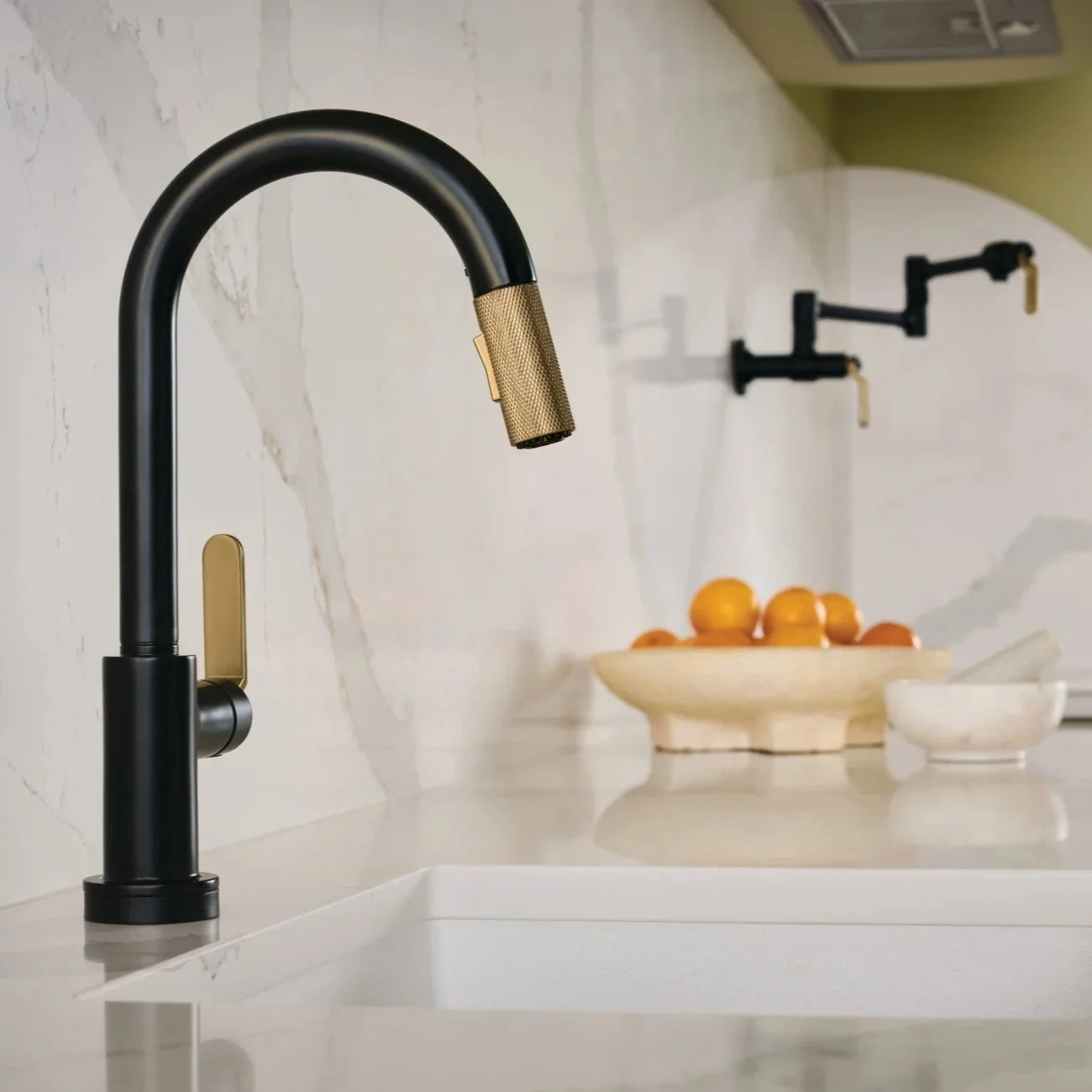
Brizo Litze: Modern Industrial With Refined Detail
The Brizo Litze collection is known for its modern industrial influence, linear detailing, and architectural character. Depending on the configuration, its more tailored forms can work beautifully in contemporary, transitional, or modern rustic interiors.
Consider pairing a Litze faucet in a warm metallic finish with matte black cabinet hardware and black-framed lighting. In a bathroom, a coordinating shower system can establish continuity while polished nickel accessories introduce a subtle reflective contrast.
This approach works especially well in spaces with natural wood cabinetry, concrete-inspired tile, or honed stone countertops.
Matte Black / Brilliance® Luxe Gold®
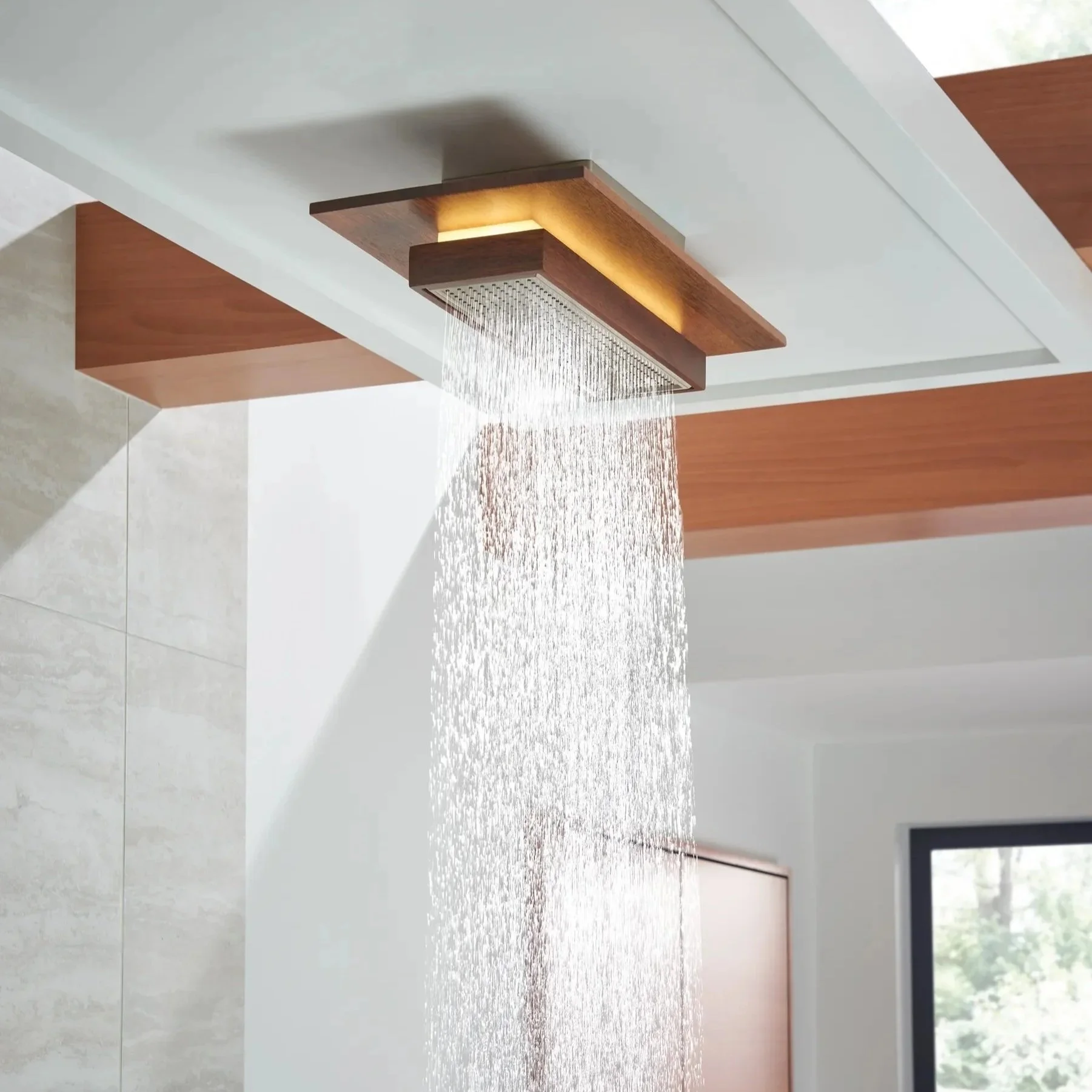
Brizo Frank Lloyd Wright Bath Collection: A More Architectural Approach
For homeowners drawn to architectural design, the Brizo Frank Lloyd Wright Bath Collection offers an opportunity to explore plumbing fixtures as part of the room's overall geometry.
The collection's design inspiration makes it a compelling direction for spaces that emphasize strong lines, craftsmanship, and carefully considered proportions.
Rather than mixing metals simply to add variety, use each finish to reinforce the architecture. A primary plumbing finish can establish continuity, while a contrasting metal in lighting or hardware highlights important lines and shapes.
Brilliance® Luxe Nickel® / Wood
Brizo's Distinctive Finishes: Beyond Basic Chrome and Nickel
Brizo offers a range of finish options across its collections, with availability varying by product. Depending on the collection, finishes worth investigating include:
Luxe Gold: A more expressive golden accent that can bring warmth and visual richness to a kitchen or bathroom.
Brilliance Brushed Nickel: A softer, less reflective alternative to polished chrome.
Brilliance Luxe Steel: A refined metallic option that can complement contemporary and transitional palettes.
Matte Black: A strong contrast finish that works especially well with lighter natural materials.
Brilliance Polished Nickel: A reflective, classic finish that can bring brightness and sophistication to a space.
Before specifying fixtures, confirm the current finish names, availability, and compatibility with the selected collection. Not every finish is offered across every Brizo product line.
The larger design lesson is that specialty finishes do not need to be used everywhere to make an impact. A single distinctive faucet or shower fixture can provide all the personality a room needs.
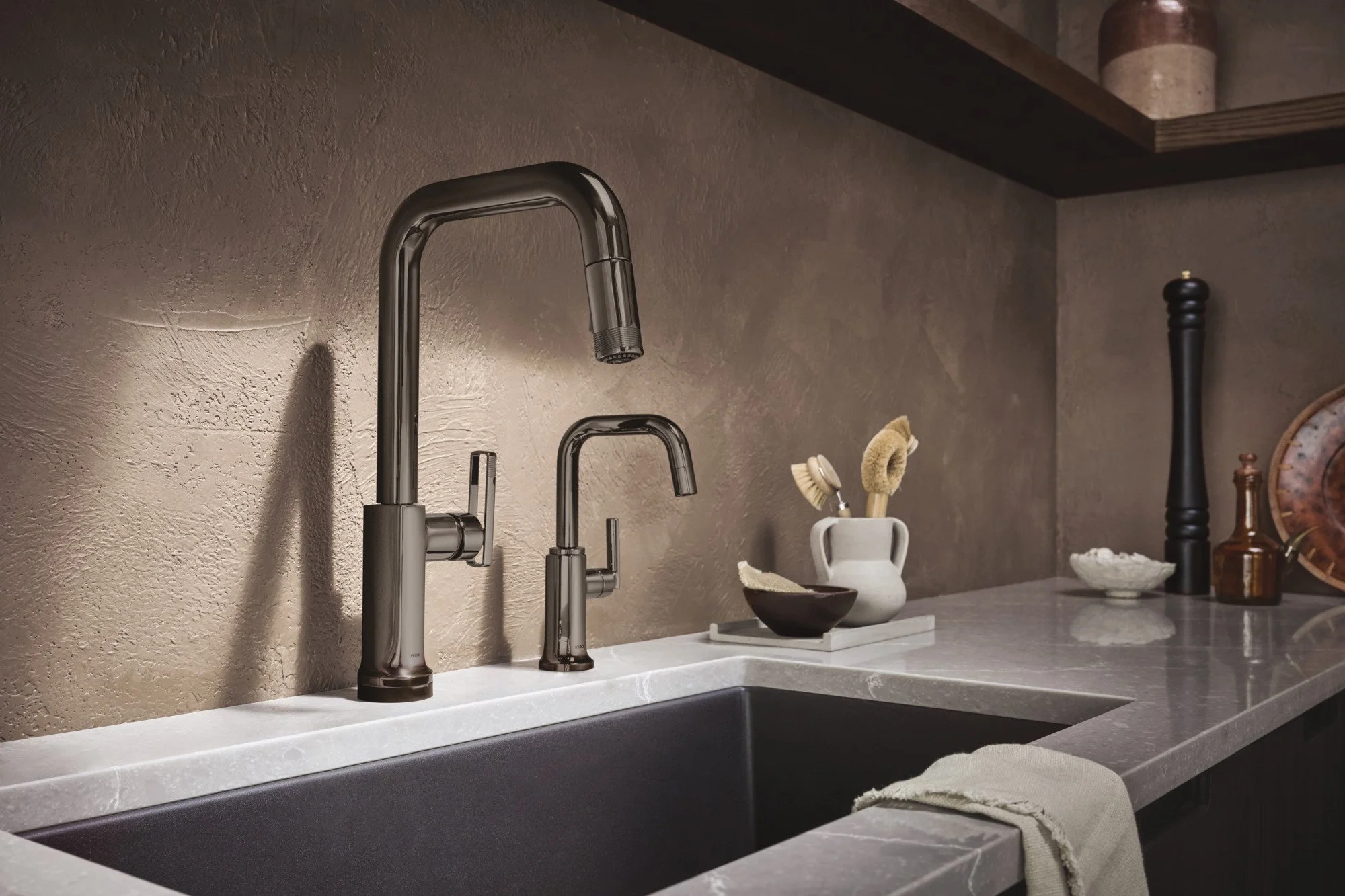
Brizo Kintsu® in Lumicoat® Black Onyx
Mix Metals by Function, Not Just by Color

One of the most effective ways to mix metals is to assign each finish a role based on the fixture or feature.
For example:
Plumbing fixtures: Establish the main finish or act as the room's focal point.
Cabinet hardware: Reinforce the dominant metal or introduce a complementary accent.
Lighting: Provide an opportunity for contrast, especially with black, brass, or bronze.
Mirror frames: Connect the lighting finish to the rest of the room.
Shower hardware and accessories: Maintain visual continuity within the shower area.
In a kitchen, you might select a statement faucet in brushed brass, cabinet pulls in matte black, and pendant lights with subtle bronze details. The finishes are different, but their placement creates a natural relationship.
In a bathroom, the shower system and vanity faucet may share one finish, while the sconces and mirror frame introduce another.
This approach also helps prevent a common design mistake: scattering too many unrelated finishes throughout a room without a clear reason for each one.
A useful rule is to repeat each major finish at least twice when practical. Repetition helps the eye recognize a deliberate pattern.
Know When to Match—and When to Contrast
Not every fixture needs to be different. Some elements benefit from consistency, particularly when they are visually close together.
In a bathroom, matching the shower trim, shower controls, and handheld shower can create a clean, cohesive appearance. You can then introduce a contrasting metal at the vanity or through the lighting.
Similarly, a kitchen faucet and matching accessories may look best in the same finish, while cabinet hardware and lighting provide contrast.
Think about the room in layers:
Layer one: Functional continuity. Keep related plumbing fixtures consistent when they form a visual group.
Layer two: Decorative contrast. Introduce a second finish through cabinet pulls, lighting, or mirrors.
Layer three: Special details. Use a third metal sparingly for a distinctive accent, such as a decorative sconce or furniture pull.
This strategy is particularly effective in smaller bathrooms, where too many competing finishes can make the room feel visually busy.
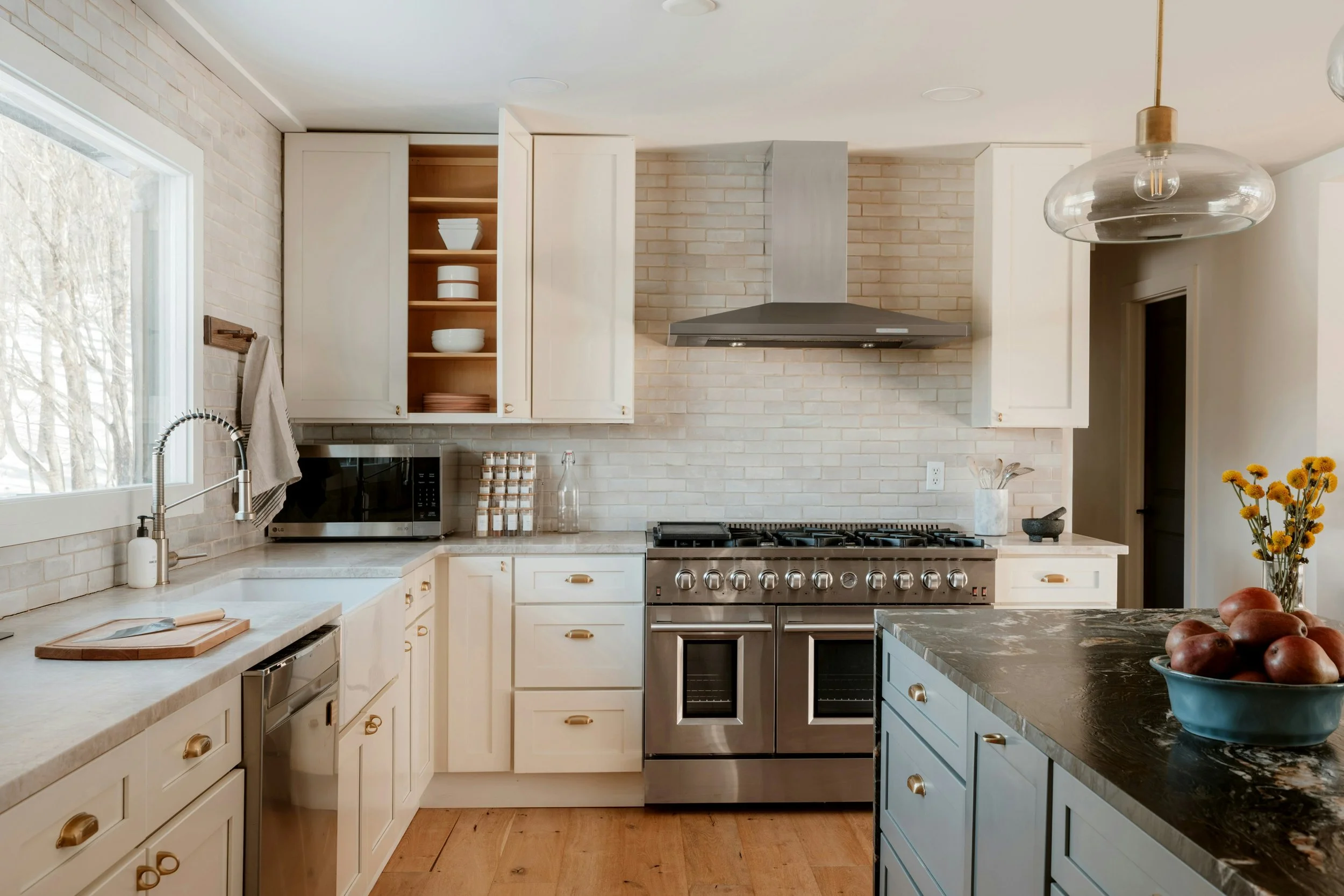
Photo by Clay Banks
Coordinate Metals With Natural Materials
Metal finishes are only one part of the design equation. The surrounding materials influence how each finish looks and feels.
In Colorado homes, natural materials often provide the ideal foundation for a mixed-metal palette. White oak, walnut, textured stone, handmade tile, and warm neutral paint colors create a backdrop that allows metallic finishes to feel integrated rather than decorative.
Consider these combinations:
Warm and organic: Brushed brass, white oak, creamy quartzite, and handmade ivory tile.
Modern and grounded: Matte black, walnut cabinetry, concrete-inspired porcelain, and charcoal stone.
Soft and sophisticated: Polished nickel, warm white cabinetry, pale marble, and muted greige walls.
Earthy and luxurious: Brushed bronze, deep green cabinetry, natural stone, and warm wood accents.
Contemporary and layered: Brushed nickel, champagne-toned accents, light oak, and sculptural white tile.
The key is to evaluate metals alongside actual material samples. A brass finish can look very different against a cool white quartz countertop than it does against warm limestone. Lighting conditions also affect how finishes appear, particularly those with polished or reflective surfaces.
When possible, view samples together in the room where they will be installed.
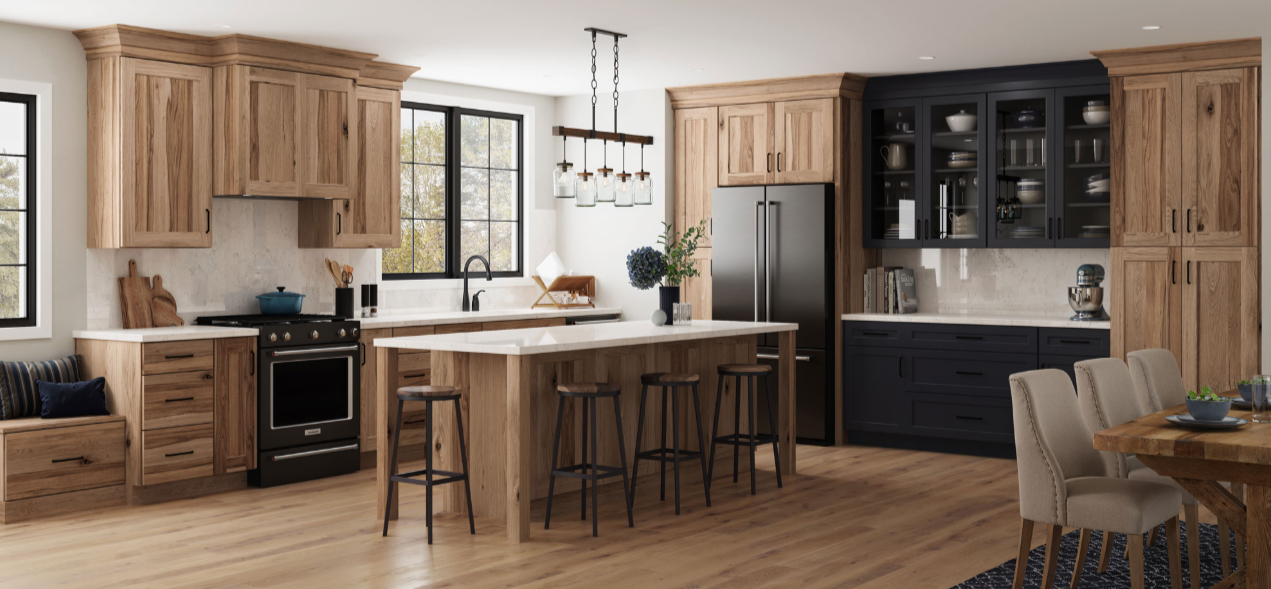
Woodland Cabinetry
Avoid These Common Mixed-Metal Mistakes
Mixing metals can be surprisingly forgiving, but a few missteps can make a space feel less cohesive.
Using too many finishes. Three finishes are often plenty for a single room. More can work in larger, highly layered spaces, but each additional finish should serve a purpose.
Choosing metals without considering undertones. Contrast is desirable, but the surrounding materials should help the finishes relate to one another.
Mixing every fixture indiscriminately. A distinctive faucet, shower trim, cabinet hardware, and lighting fixture can each have a different finish, but the combination needs a clear visual hierarchy.
Ignoring sheen. Polished, brushed, and matte surfaces reflect light differently. A mix of sheens can add dimension, but too many competing reflective surfaces can feel chaotic.
Assuming similar finish names will match. Brass, gold, and bronze vary considerably between manufacturers. Even finishes with similar names can look different in person.
Forgetting practical considerations. Water spots, fingerprints, cleaning requirements, and long-term finish durability matter just as much as appearance. Ask about maintenance recommendations and finish warranties before making your final selections.
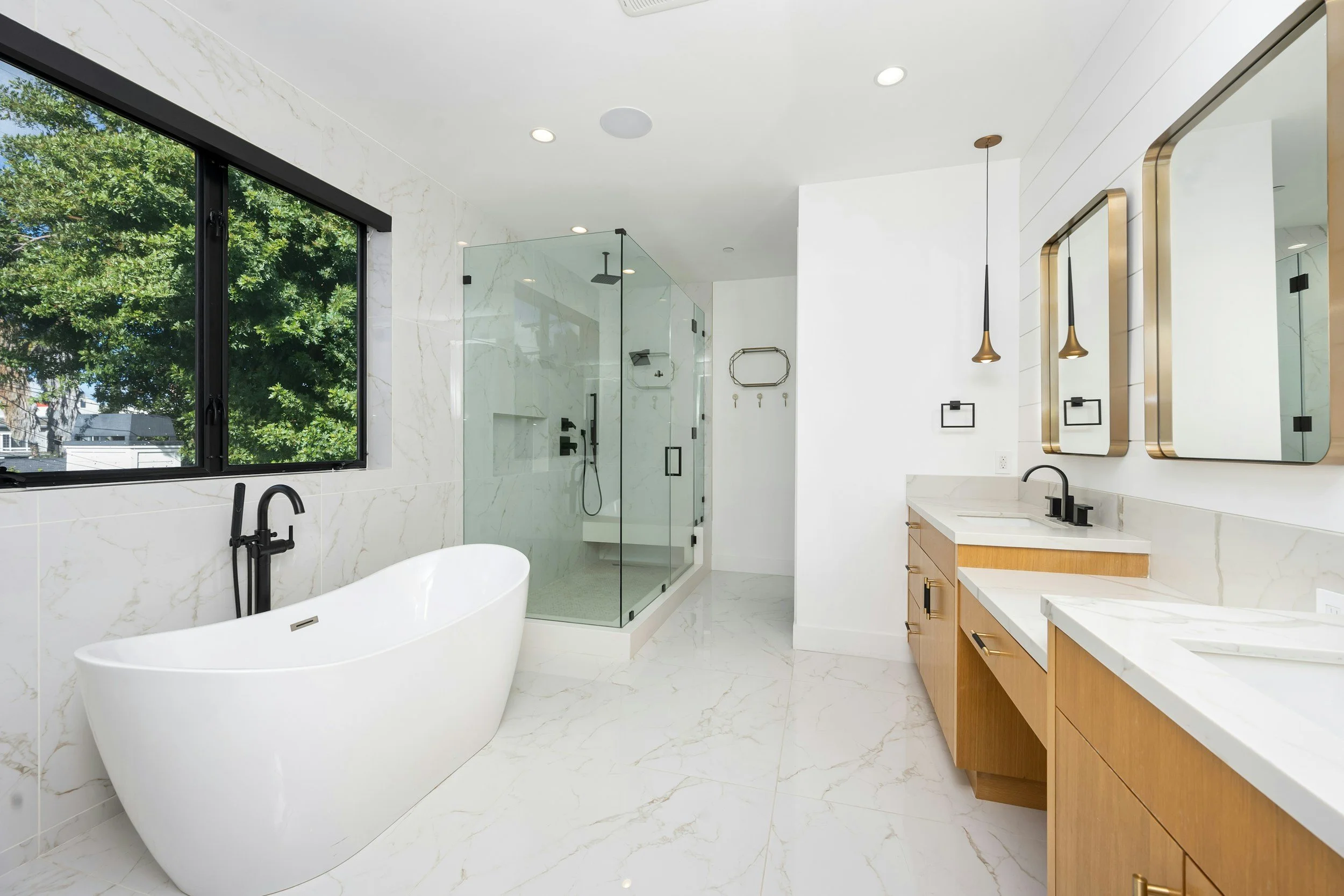
Photo by Alex Tyson
Three Mixed-Metal Palettes to Inspire Your Remodel
If you are unsure where to begin, these three palettes offer a practical starting point for a kitchen or bathroom remodel.
Palette One: Warm Modern
Colorado homes with natural wood, warm whites, and organic textures.
Main plumbing finish: Brushed nickel
Secondary finish: Brushed brass
Accent finish: Matte black
Materials: White oak, creamy stone, warm white tile
The brushed nickel provides a versatile foundation, brass introduces warmth, and black creates definition through lighting or cabinet hardware.
Palette Two: Earthy Luxury
Spa-inspired bathrooms and kitchens with rich, natural materials.
Main plumbing finish: Brushed bronze
Secondary finish: Polished nickel
Accent finish: Matte black
Materials: Walnut, warm stone, deep green or taupe cabinetry
This palette feels grounded and sophisticated. The bronze adds depth, polished nickel brings a reflective contrast, and black can tie the design together through a mirror frame or lighting.
Palette Three: Contemporary Classic
Transitional kitchens and bathrooms that balance timeless details with modern finishes.
Main plumbing finish: Polished nickel
Secondary finish: Brushed brass
Accent finish: Matte black or a dark bronze
Materials: Painted cabinetry, marble-inspired stone, simple tile
Polished nickel keeps the palette bright and refined, while brass adds a softer golden note. A small amount of black or dark bronze provides contrast without overpowering the room.
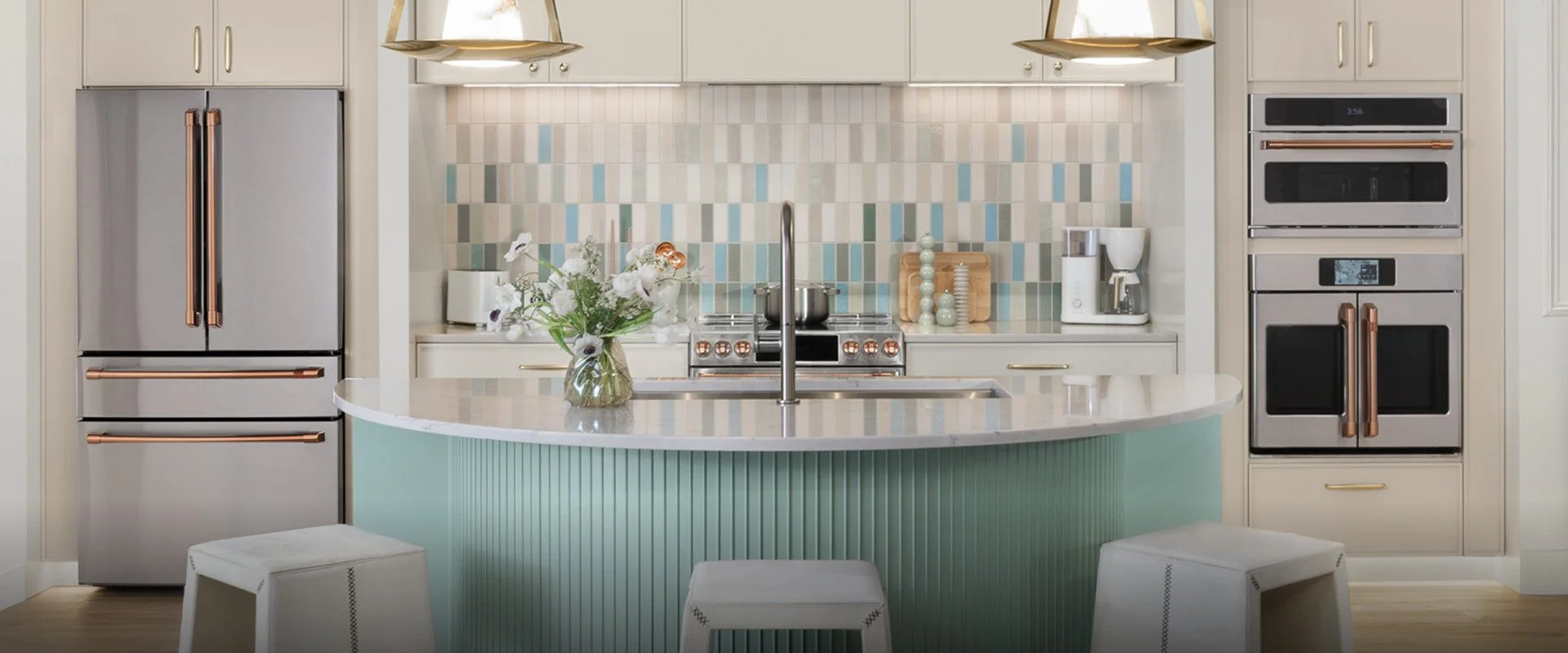
GE CAFÉ™ Series Appliances
The Takeaway: Design With Intention, Not Matching Rules
Mixing metals is less about following a strict formula and more about understanding balance, proportion, and the character of each finish.
Start with a dominant metal, introduce one complementary finish, and use a third sparingly when it adds something meaningful. Consider the surrounding materials, repeat finishes where appropriate, and allow distinctive fixtures to become focal points rather than forcing every element to match.
The most successful spaces feel collected, not coordinated to the point of predictability. When metals are thoughtfully layered with natural materials, warm colors, and well-designed lighting, the result is a home that feels timeless, personal, and distinctly yours.
Planning a kitchen or bathroom remodel in Colorado? Thoughtful fixture selection is one of the details that can transform an ordinary renovation into a cohesive, personalized space. Explore different finishes, compare samples in your home's lighting, and work with a designer to create a palette that brings every element together.